Streamline post-construction cleanup: Best contractor practices
- Joe Lusso
- May 2
- 10 min read

TL;DR:
Massachusetts requires contractors to develop waste management plans and target a 50-75% diversion rate.
Effective cleanup relies on early site assessment, waste sorting, organized bins, and documentation.
Handling hazardous materials safely and considering professional cleanup services ensures regulatory compliance and project efficiency.
Post-construction cleanup in Massachusetts isn’t just about hauling debris to the curb. Contractors and property managers face a tangle of state regulations, eco-friendly requirements, and tight project timelines that all converge at the end of every job. Get the cleanup wrong and you risk fines, delays, and a damaged reputation. Get it right and you save money, protect the environment, and hand over a polished site that keeps clients coming back. This article walks you through exactly how to do that.
Table of Contents
Key Takeaways
Point | Details |
Know Massachusetts standards | Complying with MassDEP requirements and LEED guidelines helps avoid fines and achieves eco-friendly goals. |
Step-by-step planning | A structured cleanup workflow boosts efficiency and ensures thorough site cleaning. |
Prioritize recycling | Sorting and recycling can increase diversion rates and reduce disposal costs. |
Handle hazardous waste safely | Proper identification, isolation, and disposal prevent regulatory issues and health risks. |
Consider pro help | Professional services can save time, reduce liabilities, and handle complex waste scenarios in Massachusetts. |
Understand regulatory cleanup standards in Massachusetts
Before a single piece of debris leaves your site, you need to know the rules. Massachusetts has some of the most clearly defined construction and demolition waste standards in the country, and staying ahead of them is what separates efficient contractors from ones who get stuck paying penalties or redoing work.
The Massachusetts Department of Environmental Protection (MassDEP) requires contractors to develop a waste management plan for each project. This plan identifies what materials will be generated, how they’ll be sorted, and where they’ll go. It isn’t optional paperwork. It’s a legal requirement that protects both you and the project owner.
Here’s what your regulatory checklist should cover:
Develop a project-specific waste management plan before work begins
Segregate recyclables including wood, metal, and concrete from general waste streams
Document disposal routes for every material category, including who hauls it and where it goes
Target LEED diversion rates of 50 to 75%, which align with Massachusetts sustainability goals
Keep records on-site for inspection if MassDEP or a local authority requests them
Understanding the right debris disposal methods for Massachusetts projects makes this whole process significantly easier. When your crew knows the rules, they work faster and with fewer errors.
Pro Tip: Print your waste management plan and post it at the site entrance. When every crew member can see it, compliance becomes a habit rather than an afterthought.
The EPA’s guidelines on the sustainable management of construction and demolition materials reinforce what MassDEP already mandates: segregate recyclables like wood, metal, and concrete, and aim for those LEED diversion rates of 50 to 75%. Projects that hit these targets reduce landfill costs, qualify for green building credits, and face far fewer regulatory headaches. There are also strong removal reasons for MA projects beyond compliance, including site safety, faster inspections, and improved project handover quality.
Build your step-by-step cleanup plan
Knowing the standards is one thing. Executing against them under real field conditions is another. A structured cleanup workflow keeps your crew moving efficiently while making sure nothing gets skipped, especially the documentation that protects you legally.
Here’s a proven sequence that works for Massachusetts contractor projects:
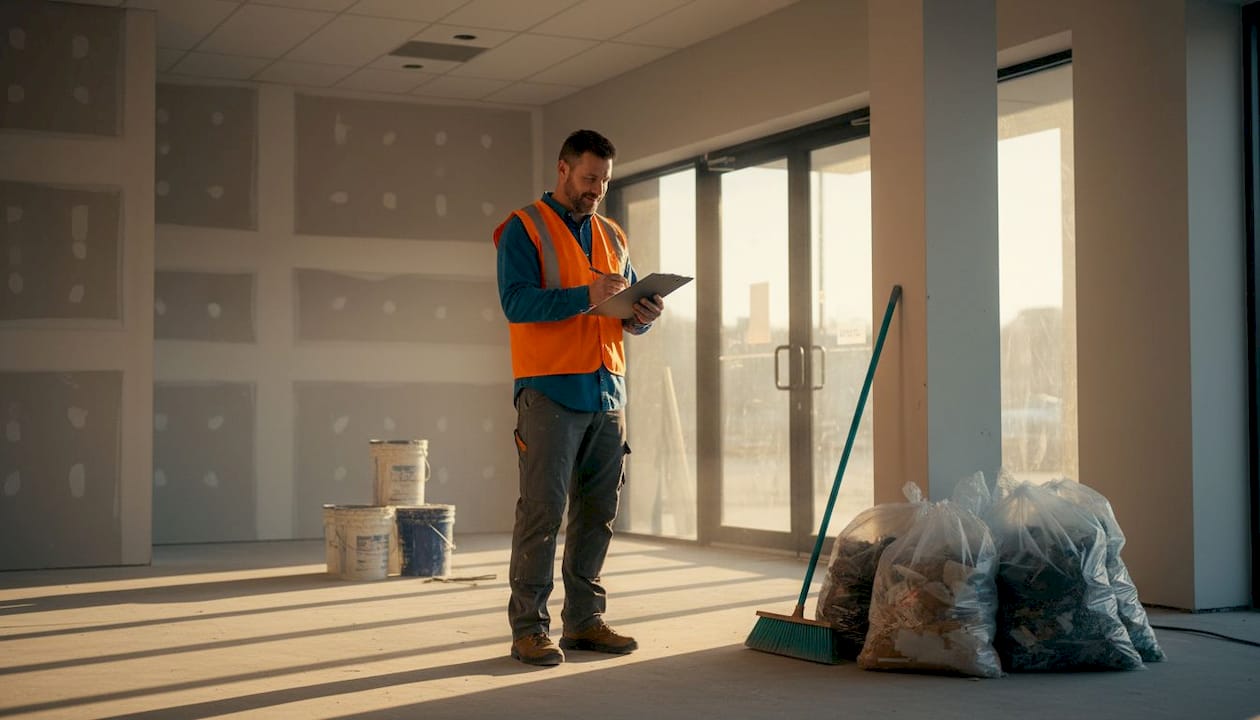
Conduct a site assessment before cleanup begins. Walk the site and identify material types, hazardous areas, and volume estimates. This shapes your entire approach.
Sort waste at the point of generation. The sooner materials are separated, the less rework you need. Train your crew to sort as they go, not at the end.
Set up labeled bins or zones for wood, metal, concrete, mixed debris, and hazardous materials. Clear organization speeds up collection and improves recycling accuracy.
Schedule pickups in advance based on volume projections. A same-day pickup partner who knows Massachusetts regulations saves you from scrambling at the deadline.
Document each disposal event. Record what was removed, when, how much, and where it went. This is your paper trail for MassDEP compliance.
Conduct a safety review at the end of each cleanup phase. Check for leftover debris, exposed hazards, and any materials that were miscategorized.
Complete a final site inspection before handing over to the client. This is your last line of defense against missed items and costly call-backs.
Using a facility cleanout step guide tailored to Massachusetts conditions can help you adapt this framework to specific project types, whether you’re clearing a renovated office space or a newly built residential property.
Pro Tip: Use a simple site log on a clipboard or shared phone app to track each load removed. Note the time, material type, and destination. This takes less than two minutes per pickup and becomes invaluable during compliance reviews.
The EPA’s framework for construction debris management consistently emphasizes planning first. Contractors who build waste management into the project schedule from day one hit those 50 to 75% diversion targets far more reliably than those who treat cleanup as an afterthought. Many experienced contractor junk removal crews will tell you that the difference between a clean handover and a chaotic one is nearly always planning, not effort.
Eco-friendly waste sorting and recycling tactics
Once your workflow is in place, the focus shifts to maximizing how much material you actually divert from landfills. This is where eco-friendly practices pay off financially, not just environmentally.
The comparison below shows how disposal routes stack up for common construction materials:
Material | Landfill cost (per ton, est.) | Recycling facility cost | Diversion credit potential |
Wood | $80 to $120 | $20 to $50 | LEED credit eligible |
Concrete | $60 to $100 | $10 to $30 | High recycling demand |
Metal (steel, copper) | $70 to $110 | Often free or paid | High scrap value |
Drywall | $80 to $120 | $15 to $40 | LEED credit eligible |
Mixed general debris | $90 to $140 | Not applicable | None |
The numbers make a clear case. Recycling most materials costs less than landfilling them, and for metals, you may actually receive payment. Diverting materials also keeps your project aligned with LEED certification requirements, which many Massachusetts property owners and developers now require.
Practical tactics to boost your recycling rates on-site:
Place separate bins in high-traffic areas near active work zones so sorting happens naturally
Use color-coded or labeled signage so workers know exactly what goes where without guessing
Hold a five-minute crew briefing at the start of each day to reinforce sorting expectations
Partner with Massachusetts-based recycling facilities that specialize in construction materials, as local partners often offer lower rates and faster turnaround
Track your diversion rate weekly so you can adjust before falling short of your targets
Incorporating eco-friendly debris solutions into your workflow doesn’t have to be complicated. The most effective projects treat recycling as a logistics challenge, not an environmental statement. When you treat it like a supply chain, it gets done consistently.
According to EPA data on sustainable construction materials, segregating recyclables like wood, metal, and concrete while aiming for LEED diversion rates of 50 to 75% is both achievable and financially smart for most Massachusetts projects. For practical field-level techniques, reviewing debris removal tips specific to Massachusetts conditions can help your crew hit those targets more consistently across different project types and seasons.
Hazardous and bulky materials: Safe handling and disposal
Recycling standard debris is one challenge. Handling hazardous or oversized materials is an entirely different level of responsibility. Mistakes here carry legal, financial, and health consequences that can follow you long after the project is done.
Common hazardous materials you’ll encounter on Massachusetts construction and renovation sites include:
Asbestos, found in older buildings built before 1980, which requires licensed abatement contractors
Lead-based paint, common in pre-1978 structures, requiring special containment and disposal protocols
Chemical solvents and adhesives, including paints, caulks, and coatings that are regulated as hazardous waste
Fluorescent lighting containing mercury, which cannot go to regular landfills
Treated wood, which may contain arsenic or chromium compounds
“All hazardous materials must be identified before cleanup begins, isolated using appropriate PPE, and disposed of through licensed facilities in compliance with both Massachusetts DEP and federal EPA standards. There are no shortcuts here.”
The steps for safe hazardous material handling are straightforward but non-negotiable. First, identify the material type through visual inspection or testing. Second, isolate it from regular debris streams using clearly marked containers. Third, provide crew members with the correct personal protective equipment (PPE) before any contact. Fourth, arrange disposal through a licensed hazardous waste hauler certified in Massachusetts.
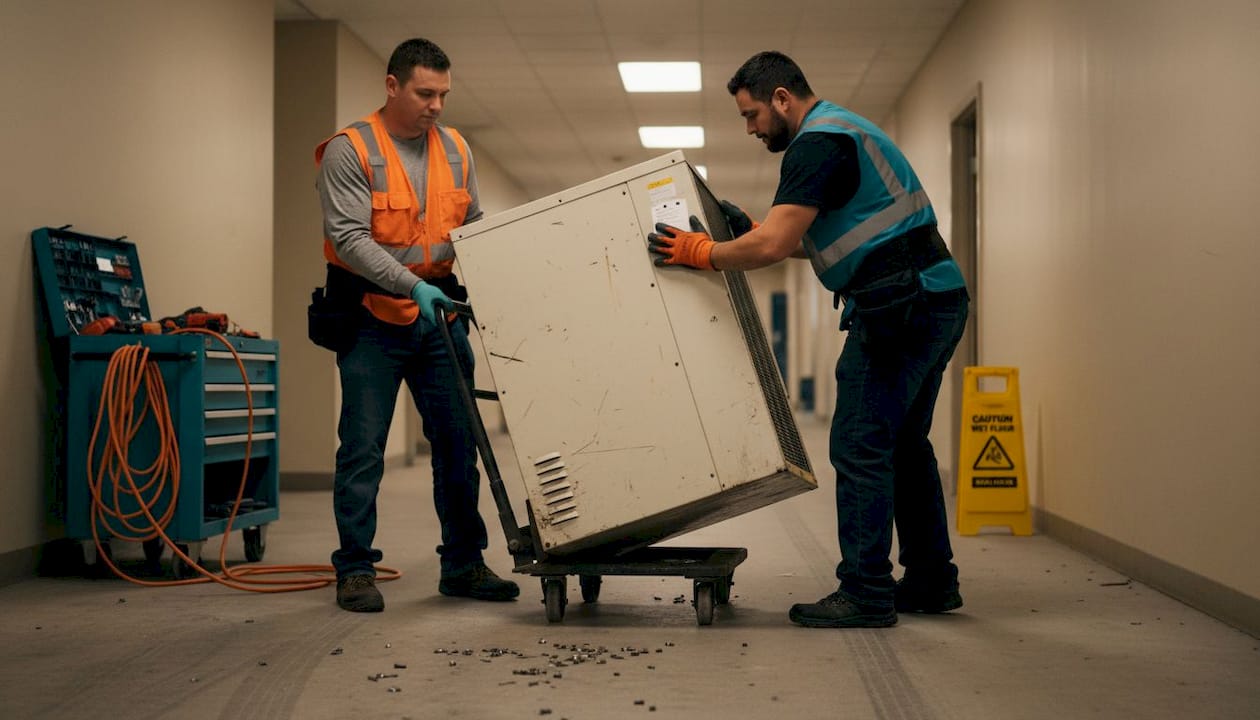
Bulky materials like large HVAC units, concrete slabs, and steel structural components require specialized lifting equipment and crew training. Never attempt to move these with inadequate equipment. The risk of injury and property damage is too high. A demolition debris guide for Massachusetts projects covers the equipment and crew requirements for these scenarios in detail.
The EPA’s guidance on construction material segregation makes clear that developing a waste plan per MassDEP isn’t just about recyclables. It includes identifying and planning for hazardous streams before any work begins. If you’re also managing a full property transition, a property cleanout guide specific to Massachusetts walks through the additional considerations you need to factor in.
Professional cleanup services: When and why to call experts
At some point on almost every large or complex project, the honest question is whether your crew should be doing the cleanup at all. The answer depends on a few key factors, and getting it right saves you time and money.
Consider calling in professional cleanup services when:
Your timeline is tight and cleanup needs to happen in hours, not days
Hazardous materials are present and your crew isn’t certified for that type of disposal
Debris volume exceeds your equipment capacity, making multiple trips impractical
Your project requires documented recycling rates for LEED certification or client reporting
You’re managing multiple sites simultaneously and can’t dedicate crew attention to each one
The benefits of working with a professional, Massachusetts-based cleanup partner go beyond speed. Licensed crews understand the specific requirements of MassDEP compliance. They carry the right equipment for bulky and hazardous materials. They document every pickup in a format that holds up during regulatory review. And because this is what they do every day, they’re faster and make fewer costly errors.
Examples of junk removal services in Massachusetts show just how wide the range of professional cleanup support can be, from same-day debris hauling to full demolition cleanup and recycling documentation. The EPA consistently reinforces through its waste diversion standards that proper segregation and a documented waste plan per MassDEP are the foundation of compliant cleanup, and professional crews build those steps into every job.
Pro Tip: When evaluating cleanup partners, ask specifically whether they provide recycling documentation. A certificate or manifest showing diversion rates protects you during inspections and gives you something concrete to share with clients who care about sustainability.
If you’re weighing your options for a specific project, a debris removal guide for Massachusetts contractors lays out the decision criteria clearly so you can make the call with confidence.
A realistic approach: Hard-won lessons for contractors and property managers
Here’s something worth saying plainly: compliance checklists don’t clean up job sites. People do. And field conditions almost never match the planning document exactly. Materials get mixed, schedules slip, and unexpected hazards show up. The contractors who handle this best aren’t the ones with the most detailed plan. They’re the ones who built flexibility into their plan from the start.
The single most common mistake we see on Massachusetts cleanup jobs is treating eco-compliance as a finish-line activity. Contractors who sort waste at the end of a project, rather than throughout, consistently end up with contaminated recycling loads that go straight to the landfill anyway. All that potential diversion credit disappears. So does the cost savings.
The most effective approach is to integrate sorting into the daily rhythm of the job from day one. That means labeled bins on site before debris is generated, not after. It means a five-minute briefing on sorting expectations at every crew change. And it means a site log that takes two minutes to update but saves hours during compliance reviews. Many experienced crews who handle streamlining projects across Massachusetts will tell you that simple systems, consistently applied, beat elaborate plans every single time.
Safety protocols are the other area where we consistently see corners cut, especially with hazardous materials. The logic is usually “it’s just a small amount” or “we’ve handled this before without incident.” That thinking eventually produces an incident. Follow the protocols every time, and make sure every crew member knows why, not just what.
The bottom line: eco-friendly and efficient aren’t opposites. When compliance is built into your workflow from the start, it speeds things up rather than slowing them down.
Ready to streamline your cleanup? Junk Dispatch can help
Managing post-construction cleanup across Massachusetts projects requires local expertise, fast turnaround, and a commitment to eco-friendly disposal that holds up under regulatory scrutiny. That’s exactly what Junk Dispatch delivers for contractors and property managers across the state.

Whether you’re working on a residential renovation in Reading, managing a commercial project across Essex County, or coordinating a full demolition and junk removal operation, our insured crews handle the heavy lifting, the documentation, and the recycling. We offer same-day service, transparent pricing, and the kind of reliability that keeps your projects on schedule. Visit Junk Dispatch to get a free estimate and book your cleanup today.
Frequently asked questions
What is the minimum recycling rate for post-construction cleanup in Massachusetts?
Contractors should target a 50 to 75% waste diversion rate, which aligns with LEED standards and Massachusetts DEP guidelines for construction and demolition projects.
Do I need a waste management plan for every construction project in Massachusetts?
Yes. MassDEP requires a project-specific waste management plan for every construction and demolition job to maintain state compliance.
How do I handle hazardous materials during a cleanup?
Identify, isolate with proper PPE, and arrange legal disposal through a licensed Massachusetts hazardous waste hauler in line with MassDEP and federal EPA standards.
Are professional cleanup services worth the cost?
For tight timelines, hazardous materials, or large debris volumes, professional crews offer regulatory expertise and speed that typically outweigh the cost of DIY cleanup mistakes and compliance risks.
Which recyclable materials are commonly sorted in Massachusetts contractor cleanup?
Wood, metal, and concrete are the most frequently segregated recyclables during post-construction cleanup in Massachusetts, and all three have established recycling facilities and cost advantages over landfilling.
Recommended
Comments