Eco-friendly solutions for every type of construction debris
- Joe Lusso
- 3 days ago
- 7 min read

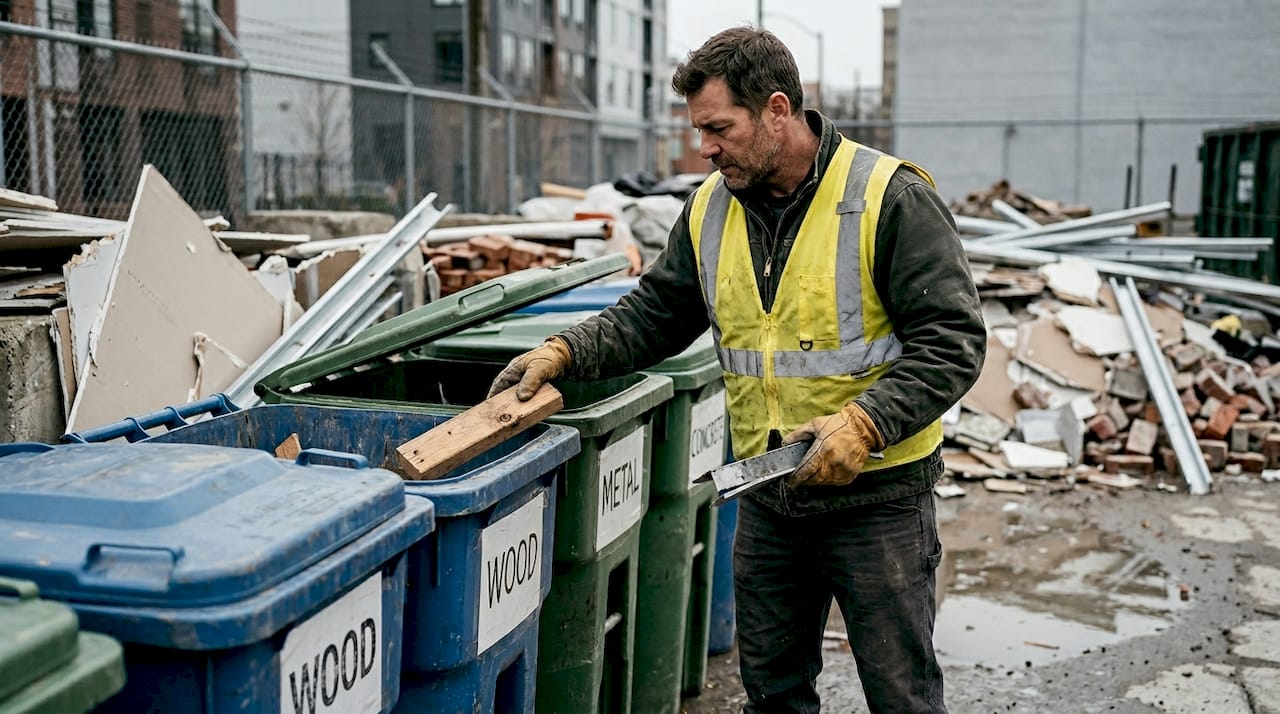
Massachusetts homeowners and contractors are navigating tighter rules than ever when it comes to getting rid of construction debris. You can’t just toss everything into a dumpster and call it a day. The state has banned landfill disposal of most construction and demolition (C&D) waste, and eco-friendly handling is now a legal requirement, not a personal preference. Whether you’re gutting a kitchen in Worcester or framing a new addition on the South Shore, knowing how to sort, recycle, and dispose of each debris type correctly protects you from fines and keeps your project on the right side of Massachusetts regulations.
Table of Contents
How to identify and sort construction debris in Massachusetts
The most common types of construction debris and how to manage them
Making eco-friendly choices for your project: Strategies and pitfalls
The uncomfortable truth about Massachusetts construction debris management
Eco-friendly construction debris removal services in Massachusetts
Key Takeaways
Point | Details |
Sort debris by type | Source separation of key materials like ABC, wood, and metals enables eco-friendly disposal and legal compliance. |
Know the regulations | Massachusetts prohibits C&D debris in landfills; permitted facilities and proper plans are required. |
Choose eco-friendly options | Prioritize recycling, deconstruction, and clean load disposal for best environmental and financial outcomes. |
Avoid contamination fines | Mixing different materials or banned recyclables can lead to costly penalties or rejected loads. |
How to identify and sort construction debris in Massachusetts
Construction and demolition debris, commonly called C&D debris, covers a wide range of materials generated during building, renovation, or teardown work. Massachusetts groups these materials into several major categories, and knowing which bucket each material falls into is the first step toward legal, eco-friendly disposal.
The main categories are:
Asphalt, Brick, and Concrete (ABC): Driveway asphalt, concrete slabs, masonry blocks, and brick from walls or chimneys
Wood: Clean dimensional lumber, plywood, and engineered wood (distinct from treated or painted wood, which requires separate handling)
Metal: Ferrous metals like steel beams and rebar, plus nonferrous metals like copper pipe and aluminum flashing
Gypsum/Drywall: Wallboard, joint compound, and ceiling tile
Mixed materials: Loads that contain more than one category, often harder to recycle and more expensive to process
Massachusetts regulations prohibit landfill disposal of C&D waste outright. Instead, the state requires that banned recyclables, including ABC, metal, wood, and gypsum, be sorted at the source before leaving your job site. C&D processing facilities are held to a rising Process Separation Rate (PSR): 20% in 2025, climbing to 23% in 2027, and reaching 25% by 2030, with no in-state landfill option available for these materials.
For eco-friendly disposal, banned recyclables must be source-sorted at the job site before transport. Mixed loads not only reduce recycling rates but can trigger fines and rejection at processing facilities. You can find additional debris disposal tips and debris disposal methods to help you plan ahead.
Pro Tip: Preparing clean, single-material loads before your hauler arrives maximizes recycling rates and helps you avoid costly penalties at the processing facility.
The most common types of construction debris and how to manage them
With the categories clear, let’s examine each type and its handling requirements in more detail.
Asphalt, brick, and concrete are the heaviest and most straightforward to recycle. Crushed concrete becomes road base; reclaimed brick gets resold for landscaping or new construction. The key is keeping these materials free of soil, rebar, or other contaminants before drop-off.
Wood is where things get complicated. Clean dimensional lumber is highly recyclable, but treated lumber (pressure-treated wood containing preservatives), painted wood, or wood with adhesives must be separated and handled differently. Mixing treated and clean wood is one of the most common sorting mistakes on Massachusetts job sites.

Metals are among the easiest materials to recycle and often carry scrap value. Separate ferrous metals (steel, iron) from nonferrous metals (copper, aluminum, brass) to get the best rates.
Gypsum/drywall can be ground into a soil amendment or new wallboard. Keep it dry and free of paint or tape for best results at the processor.
For specialty or hazardous items, the rules get stricter. Roofing materials with asbestos, insulation, and certain fixtures require special handling. MassDEP maintains resources and city or county programs to help you identify the right drop-off locations for these problem materials.
MassDEP recommends contacting your local municipality or a permitted C&D processor before transporting specialty or hazardous debris to confirm proper handling procedures.
Homeowners and contractors must sort banned recyclables at the source and prioritize permitted C&D processors for all regulated materials. For historic home renovations, deconstruction preserves materials and supports LEED goals of less than 2.5 lbs per square foot of waste and 50 to 75% diversion rates.
Pro Tip: Before demolishing an older home, walk through with a salvage company. Doors, windows, hardwood flooring, and fixtures from pre-1980 homes often have real resale value and can offset your project costs. Check our debris removal guide and removal reasons for more context.
Comparing eco-friendly disposal and recycling methods
Different debris types demand the right disposal or recycling approach. Here’s how each method compares for eco-friendliness and compliance.
Method | Best debris types | Recycling rate | Relative cost |
C&D recycling facility | ABC, metal, clean wood, gypsum | High (99%+ for metals) | Moderate |
Transfer station | Mixed loads, specialty items | Low to moderate | Moderate to high |
Deconstruction/salvage | Wood, fixtures, brick, flooring | Very high | Variable (offset by resale) |
Incineration/waste-to-energy | Treated wood, contaminated materials | Low | High |
Out-of-state landfill | Last resort only | None | Very high |
No Massachusetts landfills accept C&D debris, which means out-of-state trucking is the only landfill option, and that drives up both costs and emissions significantly. Contaminated or mis-sorted loads face fines and outright rejection at processing facilities.
The state’s long-term target is ambitious: 90% diversion of C&D waste by 2050. Metals already recycle at 99%+, but fines for mixed or contaminated metal loads are real and enforced. The gap between what’s possible and what actually happens on most job sites comes down to sorting discipline.
For the best outcomes, always verify that your hauler uses a MassDEP-permitted facility. Ask for documentation. A hauler who can’t tell you where your debris ends up is a liability, not a solution. Our removal tips and recycling solutions page can help you find vetted options.
Making eco-friendly choices for your project: Strategies and pitfalls
To put these best practices into action, here are concrete steps and common traps to avoid when planning eco-friendly debris removal.
Step-by-step best practices:
Develop a C&D Waste Management Plan before demolition begins. MassDEP and LEED standards recommend targeting 50 to 75% diversion from the start.
Set up separate labeled bins on-site for ABC, wood, metal, gypsum, and mixed waste before any work starts.
Brief your crew on what goes where. One uninformed worker can contaminate an entire clean load.
Check the MassDEP list of permitted C&D processors before booking a hauler.
Request a manifest or receipt from your hauler confirming where materials were delivered.
For small residential projects, check whether your town has a drop-off program for specific materials like clean wood or metal.
Common pitfalls and their costs:
Mistake | Likely consequence | Estimated cost impact |
Mixing banned recyclables into one bin | Load rejected at processor | $200 to $500+ extra disposal fees |
Using an unpermitted hauler | MassDEP fine for generator | $1,000+ per violation |
Sending debris to a regular transfer station | Non-compliance, potential fine | Variable, often $500+ |
Failing to document disposal | Audit liability | Legal costs plus fines |
Small residential projects (a bathroom gut, a deck teardown) can often manage sorting with just two or three bins. Larger contractor jobs need a more formal plan, especially if LEED certification or a municipal permit is involved. You can also explore recycling bulky items as part of your overall waste strategy.
The uncomfortable truth about Massachusetts construction debris management
Here’s what most guides won’t tell you: eco-friendly debris disposal is genuinely harder than it looks, even when you know the rules. We’ve seen projects where contractors did everything right on paper but still got hit with unexpected costs because a single contaminated bin forced an entire load to be reclassified as mixed waste.
The idea that going green is always simple or cost-neutral is a myth. Sorting takes time. Clean loads require discipline from every person on the job site. And the savings from higher recycling rates don’t always show up immediately. They show up in avoided fines, smoother permit approvals, and a reputation that keeps clients coming back.
The other thing most guides skip: don’t take your hauler’s word for it. Ask for facility receipts. Ask which permitted processor they use. A hauler who deflects those questions is a red flag. The most eco-friendly results we’ve seen come from projects where the homeowner or contractor stayed involved in the disposal chain, verified the realistic removal guide steps, and treated waste management as part of the project, not an afterthought.
Eco-friendly construction debris removal services in Massachusetts
If sorting, compliance, and finding permitted processors sounds like a lot to manage on top of an already demanding project, that’s exactly where Junk Dispatch comes in.
We handle eco-friendly construction debris removal across Massachusetts, from small residential bathroom teardowns to full commercial buildouts. Our crews sort materials properly, work with permitted C&D processors, and give you the documentation you need for compliance. Whether you’re in Reading or anywhere across Essex County, we offer same-day service, free estimates, and transparent pricing. No guesswork, no compliance headaches. Just responsible removal done right.
Frequently asked questions
What qualifies as construction and demolition (C&D) debris in Massachusetts?
C&D debris includes materials like concrete, brick, asphalt, wood, metal, wallboard, and fixtures generated during construction, renovation, or demolition projects of any size.
Are Massachusetts landfills allowed to accept construction debris?
No Massachusetts landfills accept C&D debris. All such materials must be sent to permitted C&D processing facilities or transported out of state, which significantly increases cost and emissions.
What are the best ways to recycle construction debris?
Source sorting and permitted processors are the most effective approach. Separate clean loads by material type on-site, then bring each category to the appropriate permitted facility for maximum diversion.
What are common mistakes when disposing of construction debris?
Mixing banned materials or failing to separate recyclables at the source are the most frequent errors. Both can result in rejected loads, unexpected fees, and MassDEP enforcement actions.
Recommended
7 construction debris disposal tips for 60% more recycling in MA
Efficient construction debris removal guide for MA homeowners
7 Construction Debris Removal Tips for 60% More Recycling in MA
Eco-friendly concrete cleaner 2026: cut aquatic toxicity 70% – The Zoofamily
7 matériaux de construction durables pour restaurer le patrimoine
Comments