Property Manager Cleanout Guide: Efficient & Compliant Results
- Joe Lusso
- Apr 22
- 7 min read

TL;DR:
Massachusetts property cleanouts require strict waste segregation and proper disposal practices.
Hiring licensed professionals ensures compliance, efficiency, and eco-friendly operations.
Proper documentation and adherence to eviction and waste laws prevent fines and delays.
When a tenant moves out and the clock starts ticking, every hour of vacancy costs money. For property managers and business owners across Massachusetts, cleanouts are rarely simple. Between state environmental regulations, banned materials lists, and eviction storage laws, a single misstep can trigger fines, legal disputes, or weeks of delay. This guide walks you through the entire cleanout process, from legal obligations to eco-friendly disposal practices, so you can turn properties faster, stay compliant, and keep your reputation intact.
Table of Contents
Key Takeaways
Point | Details |
Strict compliance is critical | Ignoring Massachusetts regulations leads to fines, delays, and tenant disputes. |
Professional help pays off | Licensed cleanout services are faster, safer, and help avoid accidental violations. |
Separate waste streams | Sorting banned materials upfront prevents costly mistakes during disposal. |
Documentation protects you | Thorough records and certified vendors safeguard against legal and regulatory issues. |
Understanding Massachusetts cleanout requirements
Massachusetts has some of the most detailed property and environmental regulations in the country, and cleanouts sit squarely in the middle of that legal web. Before you schedule a crew or rent a dumpster, you need to understand what the law actually requires of you.
For starters, sanitary refuse rules under 105 CMR 410.560 make it clear that property managers must provide proper receptacles and ensure refuse is stored in watertight containers with secure covers in multi-unit residences. This is not optional. Failing to meet these storage standards during a turnover can result in sanitation violations, tenant complaints, and municipal fines that eat into your margins fast.
The obligations also differ based on property type. Commercial properties face stricter waste segregation rules, especially for businesses generating significant volumes of organic waste or regulated materials. Residential landlords, meanwhile, must balance speed with tenant rights, particularly when evictions are involved. Getting a Massachusetts cleanout overview before you start is always worth the time.
Here is what you are legally responsible for during a typical cleanout:
Providing compliant refuse storage (watertight, covered containers)
Segregating banned materials from general trash before removal
Ensuring waste goes to licensed facilities, not illegal dumping sites
Documenting the condition of the property before and after turnover
Following eviction property storage rules if a court order is involved
Key reminder: Non-compliance is not just a paperwork problem. Municipal inspectors in Massachusetts actively monitor rental property turnovers, and fines for improper disposal can stack up quickly.
Strategic planning for reducing landlord turnover costs starts here, at the compliance stage, before a single item is moved.
Essential tools and materials for a compliant cleanout
Once you understand what the law requires, the next step is making sure you have everything in place to execute the cleanout correctly. Showing up unprepared wastes time and opens the door to violations.
Massachusetts enforces 23 waste disposal bans prohibiting landfill or incineration disposal of materials including metals, asphalt, CRT electronics, gypsum board, and organics for businesses generating over one ton per week. That means you cannot just throw everything into one dumpster and call it a day. You need designated bins for each regulated waste stream.
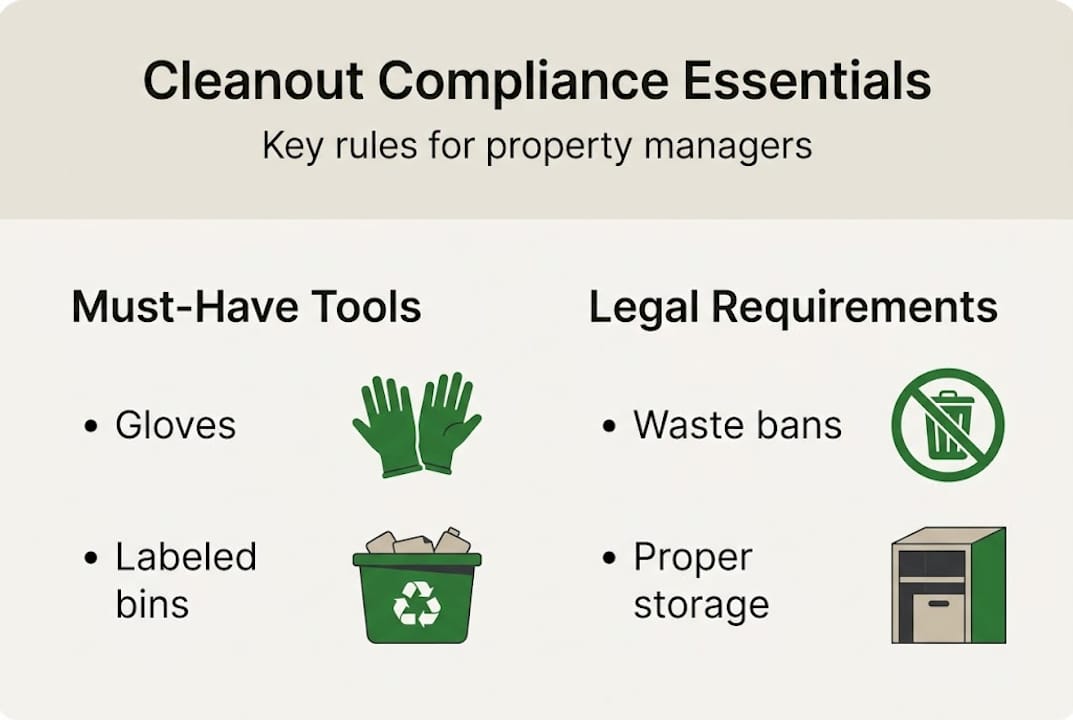
Here is a practical equipment checklist for a compliant cleanout:
Category | Items needed |
Safety equipment | Gloves, dust masks, steel-toe boots, eye protection |
Waste separation | Color-coded bins for metals, electronics, organics, general trash |
Documentation | Property condition photos, waste manifests, contractor certificates |
Transport | Licensed hauler vehicles or permitted roll-off containers |
Cleaning supplies | Industrial-grade cleaners, mops, trash bags, scrub brushes |
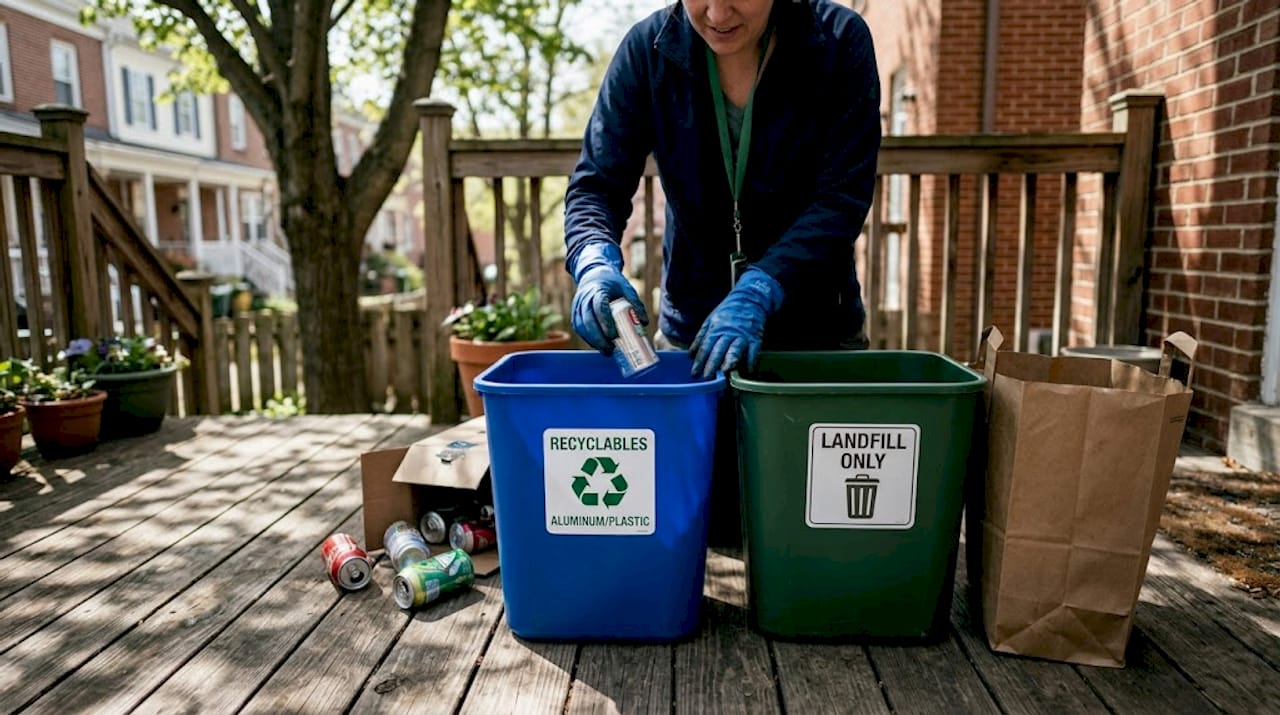
Eco-friendly practices are not just about following the law. They are increasingly a factor in tenant preferences. When prospective tenants tour a freshly turned property, they notice the details. A cleanout done with recycling in mind, appliances diverted to donation centers, and construction debris properly sorted, signals that you run a responsible operation. That perception matters.
The disposal requirements guide from Junk Dispatch breaks down which materials go where under Massachusetts rules, saving you hours of research.
Pro Tip: Label every bin clearly before the crew starts. Sorting errors at the end of a cleanout are expensive, time-consuming, and sometimes illegal. A two-dollar label can prevent a two-hundred-dollar mistake.
Step-by-step cleanout process for property managers
A cleanout done right follows a specific order. Rushing or skipping steps is where most property managers run into trouble. Here is a workflow that holds up under real-world conditions.
Initial walkthrough and inventory: Before removing anything, photograph every room. Note existing damage, abandoned property, and any materials that fall under Massachusetts waste bans.
Sort and categorize: Separate items into four groups: keep, donate, recycle, and dispose. This step prevents banned materials from ending up in the wrong container.
Remove regulated materials first: Electronics, metals, and gypsum board must be set aside for proper diversion. Do not mix them with general debris.
Handle tenant property carefully: If this is an eviction cleanout, you are legally bound by strict protocols.
Perform the physical removal: Load general waste, then coordinate licensed haulers for regulated streams.
Final cleaning and documentation: Wipe down all surfaces, photograph the completed space, and file your waste manifests.
Evictions deserve special attention. Eviction property rules in Massachusetts require that tenant property must be stored for at least 6 months in a licensed warehouse, with a proper inventory completed and the tenant notified of where their belongings are. A constable handles the physical removal, and the tenant retains the right to reclaim property by paying applicable fees. Skipping any part of this process exposes you to serious legal liability.
For non-eviction turnovers, the target is a 24 to 72-hour cleanout window. Review the full property cleanout steps to build a timeline that keeps vacancy periods short.
Turnover type | Timeline | Key legal requirement |
Standard move-out | 24 to 48 hours | Waste segregation, documentation |
Eviction cleanout | 48 to 72 hours | Licensed storage, constable involvement |
Commercial cleanout | 48 to 96 hours | Business waste ban compliance |
Pro Tip: Document everything with timestamps. If a former tenant later claims you disposed of their property improperly, photos and waste manifests are your best defense.
Avoiding common pitfalls: Compliance and efficiency tips
Knowing the process is one thing. Executing it without costly errors is another. Here are the most common places property managers go wrong, and how to stay ahead of them.
DIY cleanouts carry hidden risks. Many property managers assume that handling the cleanout themselves saves money. It often does not. Professional cleanout experts consistently highlight that licensed pros offer speed and compliance that DIY teams simply cannot match, with turnovers completed in 24 to 72 hours and proper eco-disposal built into the process. DIY efforts risk fines for improper disposal, worker injuries without insurance coverage, and delays that extend vacancy periods.
Here is what to look for when vetting a cleanout vendor:
Valid Massachusetts contractor license and general liability insurance
Proof of MassDEP or EPA certifications for regulated waste streams
Documented recycling and diversion rates
Experience with both residential and commercial properties
Transparent pricing with no hidden fees
Eco-compliance is also becoming a competitive differentiator. 67% of tenants prefer sustainable living or working environments, and property managers who align their operations with that preference fill vacancies faster. Massachusetts strict waste bans favor vendors with MassDEP and EPA certifications, and working with a licensed junk removal company protects you from liability when disposal records are later audited.
“DIY cleanouts might look cheaper upfront, but when you factor in the risk of fines, delays, and potential injuries, the math rarely works in your favor.”
The junk removal compliance guide offers a detailed breakdown of what certifications to require from your vendor before signing any contract.
Our take: What most property managers get wrong about cleanouts
After working with property managers across Massachusetts, the pattern is consistent. The biggest mistakes are not dramatic. They are quiet, incremental errors that compound over time.
The most common is underestimating the state waste bans. Property managers often know the rules exist but assume a licensed hauler will handle the details automatically. That assumption is risky. You are ultimately responsible for what leaves your property and where it ends up.
The second mistake is treating cleanouts as a purely operational task rather than a tenant experience touchpoint. How a property looks and smells on day one sets the tone for the entire tenancy. Managers who invest in thorough, eco-friendly junk removal strategies consistently report faster lease signings and fewer early-tenancy complaints.
And the DIY math almost never works. The hidden costs of delayed turnovers, improper disposal fines, and crew injuries without coverage routinely exceed what a certified professional would have charged. A compliance-first mindset, backed by the right vendor relationships, is not just good practice. It is a measurable business advantage.
Get compliant and stress-free cleanouts with professional help
Ready to stop worrying about compliance violations and extended vacancies? Junk Dispatch provides licensed, insured, and eco-compliant junk removal throughout Massachusetts, specifically built for the demands property managers and business owners face.

From Reading junk removal services to Essex County junk removal, our crews handle the full process, waste segregation, regulated material diversion, and final site cleanup, while keeping turnaround times tight. We bring local regulatory expertise, certified disposal practices, and same-day availability so you can get properties rent-ready without the legal headaches.
Frequently asked questions
What items are banned from disposal in Massachusetts cleanouts?
Massachusetts bans 23 regulated materials from landfill or incineration, including metals, CRT electronics, asphalt, and certain organics, requiring recycling or proper diversion instead.
How long must a property manager store evicted tenant belongings?
Under Massachusetts law, tenant property must remain in a licensed warehouse for a minimum of 6 months, with proper inventory and tenant notification completed.
Is it better to hire a professional cleanout service in Massachusetts?
Yes. Licensed pros deliver compliant, faster cleanouts with eco-friendly disposal, eliminating the fines, delays, and injury risks that come with DIY approaches.
How quickly should a property be cleaned out after tenant move-out?
With a certified crew, most properties can be turned over in 24 to 72 hours, keeping vacancy periods short and rental income flowing.
Recommended
Comments