5 key benefits of eco-friendly disposal in Massachusetts
- Joe Lusso
- 6 days ago
- 8 min read


TL;DR:
Eco-friendly junk removal diverts 60-80% of materials from landfills in Massachusetts.
Proper disposal reduces greenhouse gas emissions and supports environmental sustainability.
Using licensed haulers and documenting waste diversion ensures legal compliance and property value.
Massachusetts property owners face a unique disposal puzzle. Between rising landfill tipping fees and 23 state-mandated waste bans enforced by MassDEP, tossing everything in a dumpster is no longer a legal or affordable option. Eco-friendly junk removal offers a smarter path: it can divert 60-80% of materials from landfills through sorting, recycling, donation, and responsible disposal. This article breaks down the real cost savings, environmental wins, legal protections, and community benefits that make eco-conscious disposal the obvious choice for Massachusetts homeowners and property managers in 2026.
Table of Contents
Key Takeaways
Point | Details |
Comply with MA waste bans | Eco-friendly disposal helps you avoid fines and stay compliant with strict Massachusetts regulations. |
Cut costs and earn savings | Tax deductions, lower fees, and resale income lower junk removal expenses. |
Reduce emissions | Diverting waste from landfills slashes your carbon footprint and supports community health. |
Boost property reputation | Safer, greener properties attract quality tenants and buyers while building goodwill. |
Why eco-friendly disposal matters in Massachusetts
Massachusetts has some of the strictest waste management rules in the country, and for good reason. The state’s environment depends on it, and MassDEP enforces 23 waste bans that prohibit materials like electronics, mattresses, metals, and food waste from entering regular trash streams. Ignoring these rules isn’t just bad for the planet, it’s expensive.
Property owners who toss banned items into standard trash pickups risk fines, failed inspections, and rejected waste loads. Those costs add up fast, especially during large cleanouts or renovations. The smarter move is building eco-friendly disposal into your plan from day one.
Here’s what eco-friendly junk removal actually does with your stuff:
Recyclables like metals, cardboard, and plastics go to certified facilities
Usable furniture and appliances are donated to local nonprofits or resold
Organic and food waste is redirected to composting or anaerobic digestion
Hazardous materials are handled by licensed disposal specialists
Construction debris is sorted for concrete, wood, and metal recovery
The MassDEP food waste ban report shows that diversion programs are working at scale. Massachusetts municipalities and businesses have redirected enormous volumes of material away from landfills, protecting groundwater, reducing odors, and lowering the state’s overall carbon footprint.
By the numbers: Eco-friendly junk removal in Massachusetts diverts 60-80% of collected materials from landfills through responsible sorting and partnerships with recyclers, donation centers, and processors.
For homeowners managing a garage cleanout or property managers overseeing a multi-unit turnover, this matters. One decision at the start of your project, choosing an eco-friendly disposal guide approach, changes the entire downstream impact of your cleanup.
Environmental benefits: Lower emissions and landfill impact
Landfills are not passive storage. They actively generate methane, a greenhouse gas far more potent than carbon dioxide over a 20-year period. Every ton of waste diverted from a landfill reduces that gas output. Scale that across thousands of residential and commercial cleanouts per year, and the math becomes compelling.
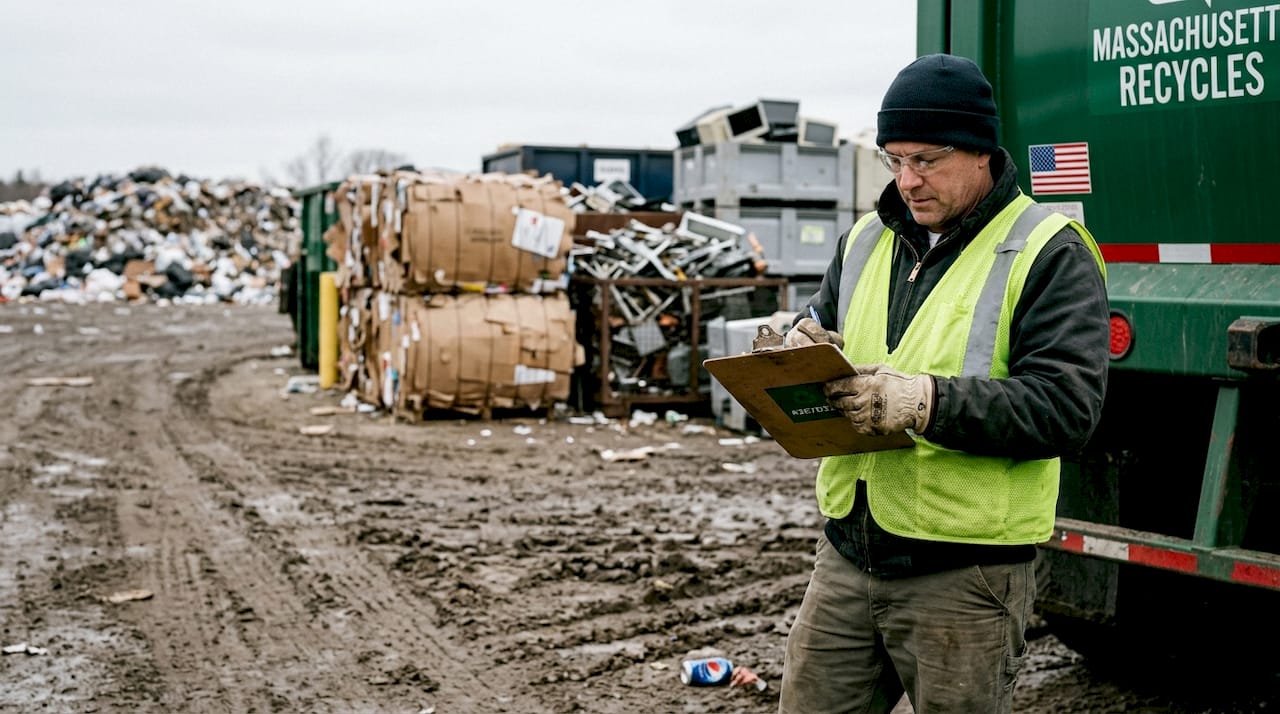
Here’s how common disposal methods stack up on emissions:
Disposal method | Relative GHG impact | Landfill diversion |
Standard landfill | Highest emissions | None |
Recycling (metals, paper) | 70-90% lower than landfill | High |
Donation and reuse | Near-zero emissions | High |
Anaerobic digestion | Can be net-negative | Complete |
Composting (open air) | Moderate (methane risk) | High |
Recycling and diversion methods can cut greenhouse gas emissions by 7 to 16 times compared to landfill disposal, with anaerobic digestion even reaching net-negative emissions under the right conditions. That’s not a marginal improvement. That’s a fundamentally different outcome.
A recent EU waste management study confirmed that proper waste sorting and diversion programs are among the most cost-effective climate strategies available to local governments and private property owners alike.
It’s worth noting: not all eco-friendly methods are equal. Open-air composting, for example, can produce methane if not managed correctly. Prioritize services that use enclosed composting systems or send organics to certified anaerobic digestion facilities.
Pro Tip: Before your cleanout, separate your recyclables into labeled bins: metals in one, electronics in another, clean cardboard in a third. This pre-sorting reduces processing time and ensures more material actually reaches recycling facilities instead of getting landfilled as mixed waste.
When you work with eco-friendly junk solutions from a certified provider, your crew handles that sorting for you. But knowing the why behind it makes you a smarter client and helps you communicate your priorities clearly upfront.
Financial perks: Savings, tax breaks, and added value
Here’s where eco-friendly disposal goes from feeling good to making financial sense. Most Massachusetts homeowners don’t realize that choosing greener disposal methods can directly reduce what they pay and even generate returns.
Recycling fees typically run 20-35% lower than standard trash disposal rates. That gap widens as landfill tipping fees keep climbing. If you’re managing a large property cleanout with multiple appliances, furniture sets, or demolition debris, that percentage difference translates into real savings.
Material type | Avg. landfill cost per ton | Avg. recycling cost per ton | Savings |
Mixed metals | $80-120 | $0-30 (often rebated) | 75-100% |
Electronics | $50-90 | $10-40 | 55-80% |
Clean cardboard | $60-100 | $0-20 | 70-100% |
Mattresses | $50-80 | $15-35 | 40-65% |
Beyond direct fee savings, donating usable items like furniture, appliances, and clothing generates tax receipts. Those deductions offset your junk removal costs when tax season arrives. Some homeowners are surprised to find that a single estate cleanout can generate hundreds of dollars in deductible donations.
Scrap metal and functional electronics are another opportunity. Copper wiring, aluminum fixtures, and working appliances often have resale value. A good junk removal provider will flag these items and either reduce your bill or handle the resale directly.
The commercial organics ban in Massachusetts created 1,676 jobs and generated $390 million in economic activity statewide. That means your eco-friendly choices also support junk removal sustainability at a local employment level, keeping money and jobs circulating in Massachusetts communities.
Here’s a quick look at where eco-friendly disposal generates financial returns for property owners:
Lower tipping fees through recycling partnerships
Tax deductions for donated household goods
Revenue from scrap metal and electronics resale
Avoided fines from MassDEP ban violations
Faster property turnaround and reduced holding costs
Legal compliance and community reputation
Disposing of junk the wrong way in Massachusetts isn’t just messy. It’s a legal liability. MassDEP enforces its 23-item waste ban through inspections, audit trails, and penalties. Property managers who rely on unverified haulers risk being held responsible for improper disposal, even if they didn’t load the truck themselves.
Eco-friendly disposal, handled by a licensed and insured crew, protects you from that exposure. Here’s how to structure your approach:
Hire licensed haulers who are registered with MassDEP and carry proper insurance
Request itemized waste manifests for every cleanout, showing what was recycled, donated, or specially disposed of
Document hazardous materials separately including paint, batteries, fluorescent bulbs, and electronics
Retain diversion reports for at least three years in case of audit or tenant dispute
Verify disposal destinations by asking your hauler which facilities they use and whether those sites are certified
Pro Tip: Ask your junk removal provider for a waste diversion report after each cleanout. This document shows exactly where your materials went and serves as proof of compliance if MassDEP ever audits your property.
Beyond legal protection, eco-friendly disposal shapes how tenants, buyers, and neighbors perceive your property. Clean, responsibly maintained spaces attract better tenants and command stronger sale prices. It’s a straightforward connection: safer environments create more desirable properties.
Using services with strong safety in junk removal protocols also reduces liability during the removal process itself. Insured crews who handle licensed junk removal protect you from worksite accidents that could otherwise become your financial responsibility. The hazardous materials guidelines for Massachusetts are specific and non-negotiable, so documentation matters.
A local expert’s take: The real world of eco-friendly disposal in Massachusetts
Most articles stop at the general benefits. Here’s what they miss.
Massachusetts waste bans are genuinely good policy, but they raise disposal costs 50 to 100% above the national average in some categories. That’s the uncomfortable truth. Property owners who simply swap haulers without changing their approach often end up paying more without the compliance or environmental benefits they expected.
The real offset comes from strategic recycling and using municipal resources that most homeowners overlook entirely. Nearly every Massachusetts city and town offers free household hazardous waste (HHW) collection days for items like paint, pesticides, and batteries. Mattress recycling programs are also widely available at little to no cost. These programs can eliminate what would otherwise be the most expensive line items in a cleanout.
Hazardous waste deserves special attention. It’s the category where DIY disposal most often goes wrong, and where penalties are steepest. If your cleanout involves paint, fluorescent lights, or old chemical containers, don’t guess. Use a service that provides certified handling and get documentation.
Our advice for Massachusetts homeowners: choose providers who offer waste diversion reports and can connect you to the Massachusetts homeowner’s eco guide resources that simplify the process. The right service doesn’t just haul your junk. It protects your wallet, your property, and your compliance record.
Get started with eco-friendly junk removal in Massachusetts
You now know the financial, environmental, legal, and community case for eco-friendly disposal. The next step is finding a local team that delivers on all of it without making you manage the details yourself.
Junk Dispatch serves Massachusetts homeowners and property managers with same-day junk removal, transparent pricing, and a real commitment to eco-conscious disposal. Whether you need a residential cleanout in Reading, MA, full-service coverage across Essex County, or help with a commercial project anywhere in the state, we handle the sorting, hauling, recycling, and documentation for you. Visit Junk Dispatch to book online, get a free estimate, and put eco-friendly disposal to work for your property today.
Frequently asked questions
How much waste is typically diverted from landfills with eco-friendly disposal in Massachusetts?
Eco-friendly junk removal in Massachusetts diverts about 60-80% of collected material from landfills through recycling, donation, and responsible processing. The exact percentage depends on the type of junk and which disposal methods your provider uses.
What items are banned from regular trash disposal by MassDEP?
MassDEP enforces bans on 23 material types including metals, electronics, mattresses, tires, and food waste. Disposing of these in regular trash can result in rejected loads and fines for property owners.
How does eco-friendly disposal impact property management costs?
It reduces overall costs through lower recycling fees, tax deductions for donations, and potential revenue from scrap metal or electronics resale, while also helping you avoid fines from improper disposal.
Are there any free resources for homeowners to dispose of hazardous or specialty items?
Yes, most Massachusetts municipalities offer free HHW collection days for paint, batteries, and chemicals, along with mattress recycling programs available at little or no cost to residents.
Recommended
Comments