Responsible Disposal: Declutter Sustainably in Massachusetts
- Joe Lusso
- Apr 14
- 8 min read


TL;DR:
Proper waste disposal in Massachusetts involves using licensed haulers, sorting recyclables, and following state regulations. Failing to comply can result in hefty fines, environmental damage, and property liability. Planning and responsible practices protect property value, tenant trust, and legal standing.
Tossing everything into a single pile during a cleanout feels efficient until the fines arrive. Massachusetts homeowners and property managers who skip proper disposal procedures risk penalties ranging from hundreds to tens of thousands of dollars, plus long-term damage to their property’s reputation. Responsible disposal is not just a feel-good concept. It is a legal obligation with real consequences. This guide walks you through exactly what responsible disposal means, what Massachusetts law requires, how to pick the right method, and how to keep your property clutter-free without cutting corners.
Table of Contents
Key Takeaways
Point | Details |
Legal compliance is critical | Following Massachusetts regulations keeps you safe from fines and protects your property value. |
Licensed haulers are a must | Always use certified junk removal services to ensure responsible and eco-friendly disposal. |
Recycling access is required | Multi-family properties must provide tenants with easy, documented access to recycling. |
Donation and e-waste matter | Donating items and using certified e-waste options minimize landfill waste and help your community. |
Simple steps prevent headaches | Planning disposal and vetting providers now avoids legal and logistical problems later. |
What responsible disposal really means
Most people assume responsible disposal means dropping junk at the curb and letting someone else figure it out. That assumption is expensive. True responsible disposal covers three overlapping areas: legal compliance, environmental protection, and personal liability management. Miss any one of them and you are exposed.
Here is what responsible disposal actually includes:
Using licensed haulers who follow state regulations and sort waste properly
Separating recyclables, hazardous materials, and general waste before pickup
Donating or reselling items still in usable condition
Properly disposing of electronics, appliances, and chemicals through certified channels
Keeping documentation of disposal for liability protection
The environmental stakes are higher than most people realize. Improper dumping contaminates soil and groundwater, which affects neighboring properties and can trigger cleanup orders from the state. If your rental property is tied to an illegal dump site, you could face liability even if a tenant caused the problem.
“Responsible disposal means using licensed haulers and following regulations.” Skipping this step is not just risky for the environment. It creates direct legal exposure for property owners and managers.
Property value is another factor people overlook. Buyers and appraisers notice when a property has a history of code violations or environmental complaints. Eco-friendly junk removal practices protect your investment by keeping your record clean. For property managers specifically, responsible disposal also affects tenant trust. Tenants who see waste handled carelessly raise complaints, leave bad reviews, and sometimes report violations to local authorities.
The safety and compliance of junk disposal matters beyond just following rules. Improper handling of heavy furniture, old appliances, or construction debris creates physical hazards for workers and residents. Using trained, insured crews eliminates that risk entirely. If you manage multiple units, the MA property manager disposal tips available from local experts can help you build a repeatable system instead of reacting to each cleanout individually.
Laws and regulations for disposal in Massachusetts
Massachusetts has some of the strictest disposal regulations in the country. Understanding the framework helps you stay compliant and avoid surprises during audits or inspections.
Rule | Who it applies to | Consequence of violation |
Recycling access requirement | Multi-family property owners | Fines, tenant complaints, legal action |
Hazardous waste ban | All residents and businesses | Fines up to $25,000 per incident |
Electronics disposal ban | All property types | Fines and mandatory remediation |
Licensed hauler requirement | Anyone hiring removal services | Liability for illegal dumping |
Food waste ban (5+ tons/week) | Commercial and large residential | MassDEP audits and penalties |
Multi-family buildings must provide recycling access to tenants, and hauler compliance is enforceable. Fines can be severe and are applied per violation, not per incident. The Massachusetts Department of Environmental Protection (MassDEP) enforces via audits and fines ranging from $500 to $25,000, and managers avoid liability by vetting providers for MassDEP compliance before signing any contract.
Here is how to stay on the right side of the law:
Verify your hauler holds a valid Massachusetts solid waste transport license before scheduling any pickup.
Ask specifically how they handle electronics, appliances, and hazardous materials.
Request a written receipt or manifest for every load removed from your property.
Ensure recycling bins are accessible to all tenants in multi-unit buildings.
Check whether your hauler uses R2 or E-Stewards certified facilities for electronics.
For electronics specifically, certification programs like R2 (Responsible Recycling) and E-Stewards set the standard for safe, traceable processing. These programs ensure that old TVs, computers, and appliances do not end up in overseas landfills or get stripped for parts in unsafe conditions.
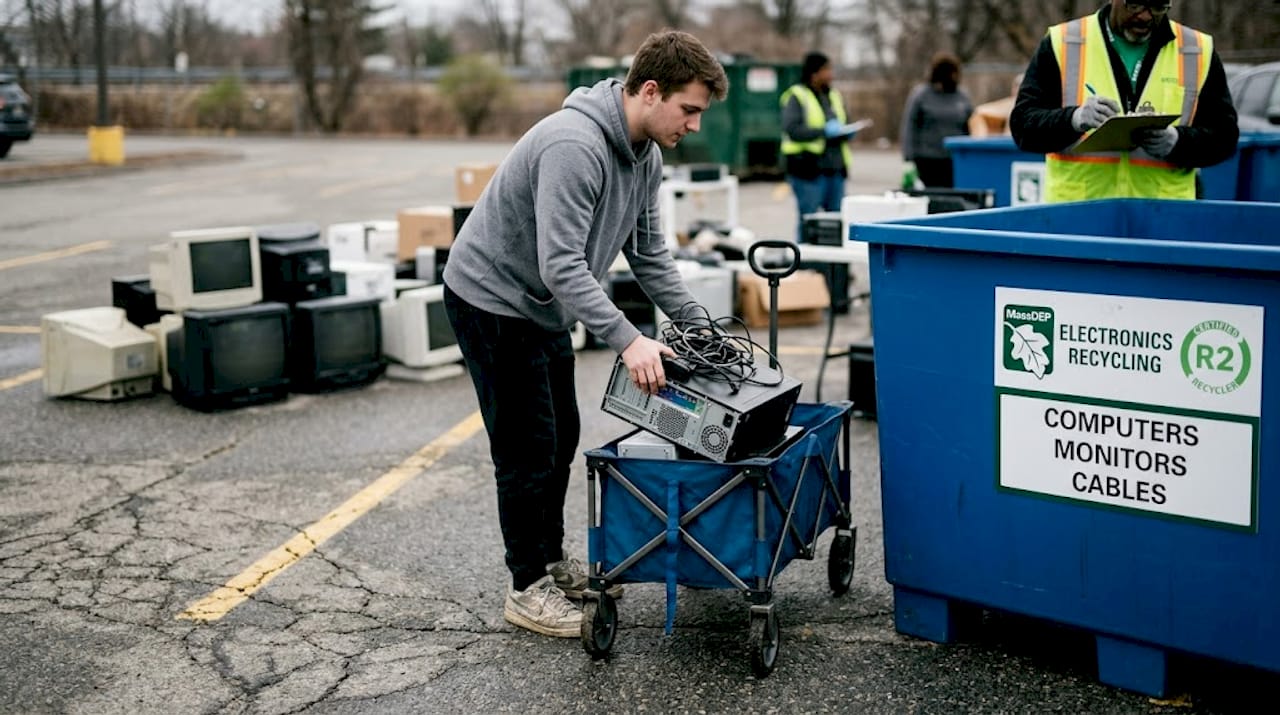
Pro Tip: Before hiring any junk removal company, ask to see their MassDEP hauler registration number. A legitimate company will provide it without hesitation. If they hesitate, walk away.
Understanding junk removal compliance in MA is not optional for property managers. It is a core part of operating responsibly. And working with licensed junk hauler requirements that meet state standards protects you from being held responsible for a contractor’s mistakes.
How to choose the right disposal method
Not every item needs the same solution. Matching your disposal method to the type of item saves money, reduces waste, and keeps you legally protected.
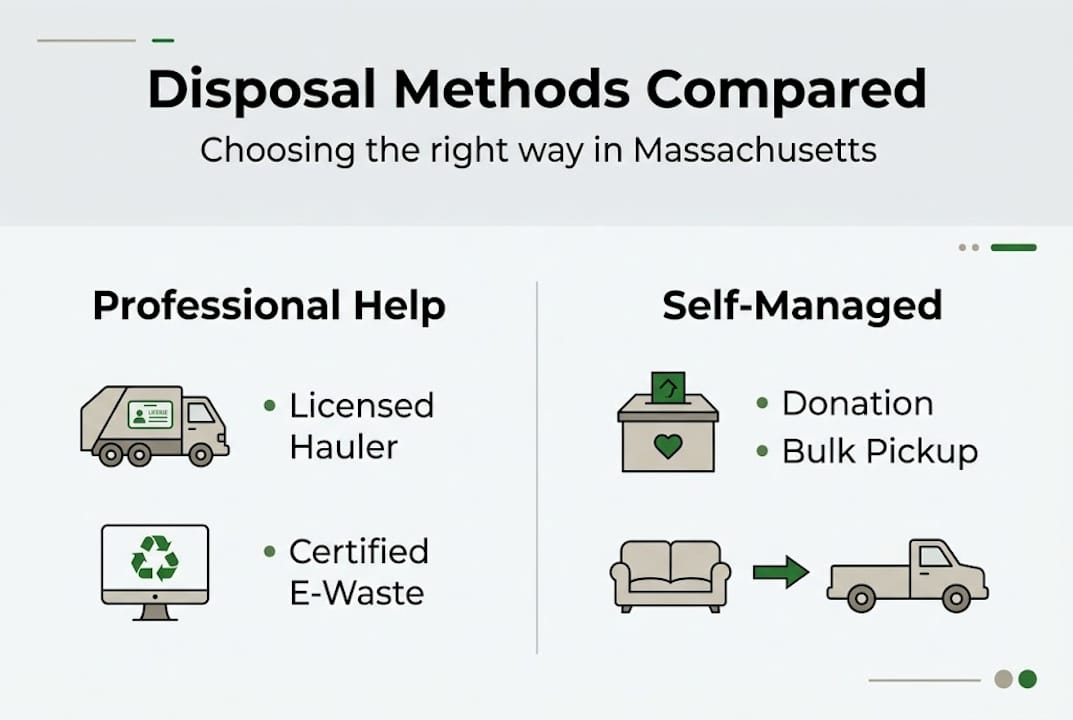
Method | Best for | Pros | Cons |
Licensed hauler | Large volumes, mixed junk | Fast, compliant, insured | Costs more than DIY |
DIY drop-off | Small loads, single items | Cheap, flexible | Time-consuming, limits on materials |
Donation | Furniture, clothes, appliances | Free, reduces landfill | Items must be in good condition |
Recycling center | Metals, paper, glass | Eco-friendly, often free | Requires sorting and transport |
Certified e-waste | Electronics | Legal compliance, safe | Must use certified facility |
Using licensed haulers ensures compliance and eco-friendly processing, especially for mixed loads that include both general junk and regulated materials. For property managers handling tenant turnover, a licensed hauler is almost always the most practical choice.
When evaluating junk removal companies, ask these questions:
Are you registered with MassDEP as a solid waste hauler?
Do you separate recyclables from landfill waste?
How do you handle electronics and appliances?
Can you provide a receipt or manifest for each pickup?
Are your crews insured and trained?
Items that require specialty handling include: old paint and solvents, fluorescent bulbs, batteries, refrigerants in appliances, asbestos-containing materials, and medical waste. Never mix these with general junk.
Pro Tip: For electronics, use only certified e-waste haulers. An uncertified company may charge you less upfront but could expose you to liability if the materials are illegally dumped.
The junk removal impact for homeowners goes beyond just clearing space. Choosing the right method protects your health, your finances, and your community. And following a proper junk removal safety guide during the process reduces the risk of injury to you, your tenants, or the crew.
Sustainable decluttering: Best practices for homes and multi-unit properties
Having the right method is only half the job. Executing it cleanly and efficiently is what separates a smooth cleanout from a chaotic one.
Follow this process for any property cleanout:
Sort first. Walk through the space and separate items into four categories: keep, donate, recycle, and dispose. Do this before calling anyone.
Identify regulated items. Flag electronics, appliances, paint, and chemicals early so they can be routed to the right facility.
Notify tenants early. For multi-unit buildings, give written notice at least two weeks before a bulk disposal event.
Schedule strategically. Book pickups during low-traffic times to minimize disruption to tenants and neighbors.
Request documentation. Always get a written receipt from your hauler confirming what was removed and how it was processed.
For multi-family buildings, recycling access is not optional. Here is how to make it easy:
Place labeled bins in visible, accessible locations on each floor or in shared areas
Post clear instructions in multiple languages if your tenants speak different languages
Schedule regular recycling pickups so bins do not overflow
Designate a contact person tenants can reach with disposal questions
MassDEP requires that property owners handle bulk cleanouts responsibly and provide recycling access to tenants. Failing to do so is not just a violation. It is a liability that follows the property, not just the owner.
Smart scheduling is one of the most underrated tools in property management. Coordinating bulk disposal events quarterly instead of reacting to every tenant move-out reduces costs, complaints, and compliance risk. If you are managing junk removal during moves, planning ahead makes the transition smoother for everyone. And for larger properties, building a relationship with a provider who understands efficient property cleanouts pays off over time.
Our take on responsible disposal in Massachusetts
Here is something most guides will not tell you: the biggest disposal mistakes we see are not about ignorance of the law. They are about timing. Homeowners and managers wait until move-out day or a major renovation to deal with months or years of accumulated junk. That rush leads to bad decisions, including hiring whoever is cheapest and available immediately.
Unvetted companies are a real risk. They may accept your payment, haul your junk, and dump it illegally. You are still liable because the waste came from your property. That is not a hypothetical. It happens in Massachusetts regularly.
The uncomfortable truth is that “good enough” disposal is not actually good enough. Partial compliance still leaves you exposed. A hauler who recycles some items but illegally dumps electronics creates liability for you.
Our contrarian tip: start with the easy wins. Donate usable furniture. Drop off electronics at a certified facility. These small steps build momentum and make the larger cleanout feel manageable. Why sustainability matters in junk removal is not just an environmental argument. It is a practical one. Responsible habits reduce your long-term costs and protect your property’s reputation.
Get help with responsible disposal today
If sorting regulations, vetting haulers, and coordinating tenant notices sounds like a lot to manage alone, you are not wrong. It is a lot. But it does not have to be.
Junk Dispatch serves Massachusetts homeowners and property managers with licensed, insured, and eco-conscious junk removal that meets MassDEP standards. Whether you need a one-time garage cleanout or ongoing support for a multi-unit building, we handle the logistics so you do not have to. We serve communities across the state, including Reading, MA junk removal and Essex County junk removal services. Get a free estimate and book online at Junk Dispatch today.
Frequently asked questions
What counts as responsible disposal in Massachusetts?
Responsible disposal means using licensed haulers and following state recycling laws, ensuring waste is properly sorted and routed to compliant facilities rather than general landfill.
What are the penalties for improper disposal?
Penalties in Massachusetts range from $500 to $25,000 per violation, and property managers can face direct liability if their hired hauler dumps illegally.
Is recycling required in multi-family properties?
Yes. Multi-family buildings must provide tenants with accessible recycling services, and failure to comply is enforceable by MassDEP.
How can I verify my junk removal company is responsible?
Ask for their MassDEP hauler registration number, confirm they separate recyclables, and check for R2 or E-Stewards certification if they handle electronics. Managers avoid liability by vetting providers before any contract is signed.
Can I donate instead of dumping my items?
Absolutely. Donation is a responsible and encouraged option for items in usable condition, and it directly reduces landfill volume while benefiting your community.
Recommended
Comments