Why schedule regular cleanouts: boost efficiency and eco results
- Joe Lusso
- Apr 21
- 8 min read


TL;DR:
Regular junk cleanouts in Massachusetts prevent legal fines and health hazards from accumulated debris.
Scheduled cleanouts improve space organization, reduce costs, and lower compliance and emergency response risks.
Consistent removal supports eco-friendly disposal, recycling, and donation, aligning with Massachusetts’ sustainability goals.
Skipping regular junk cleanouts in Massachusetts isn’t just a matter of clutter. It can cost you real money. Property owners across the state face fines, health violations, and liability risks when accumulated junk isn’t handled properly. Massachusetts public health code requires lawful refuse storage and disposal, and ignoring that obligation puts homeowners and business owners in a tough spot. This guide walks you through why scheduled cleanouts matter, how they improve your day-to-day life, and what eco-friendly and legal benefits come with getting on a regular removal schedule.
Table of Contents
Key Takeaways
Point | Details |
Avoid fines and hazards | Regular cleanouts help you stay compliant with Massachusetts regulations and prevent health risks. |
Increase efficiency | Routine removal of junk and clutter improves organization and daily productivity for homes and businesses. |
Boost sustainability | Eco-friendly cleanouts ensure hazardous items are handled correctly and maximize recycling and donation. |
Choose local experts | Selecting a Massachusetts-licensed cleanout provider simplifies compliance and eco disposal for all property types. |
Legal and health reasons for regular cleanouts in Massachusetts
Massachusetts takes refuse management seriously, and for good reason. Piled-up junk creates conditions that attract rodents, mold, and other hazards that spread quickly in residential and commercial spaces. Beyond the physical risks, there are real legal consequences for property owners who don’t comply with state standards.
“Proper refuse storage and disposal isn’t optional in Massachusetts. Landlords and property owners are responsible for ensuring junk and debris are removed in a timely, lawful manner.”
105 CMR 410.560 outlines the state’s rules on refuse storage and disposal, requiring that all refuse be stored in covered containers and removed regularly. Violations can result in fines and code enforcement actions, particularly for rental properties and commercial spaces. Professional services exist specifically to help property owners stay on the right side of these rules, especially when bulk or hazardous items are involved.
Here’s why the health angle matters just as much as the legal one:
Mold and moisture buildup accelerates when organic waste and old materials sit undisturbed for months
Pest infestations become far more likely when debris accumulates in garages, basements, or storage areas
Air quality inside a home or business drops significantly around deteriorating materials like old furniture and appliances
Fire hazards increase when flammable items pile up near electrical sources or heating equipment
Structural damage can develop when heavy junk is stored improperly over long periods
Did you know? A single neglected garage can harbor enough flammable and toxic material to pose a serious risk to neighboring units or businesses. That’s not an exaggeration. It’s one of the most common code violation triggers inspectors find during property reviews.
For homeowners already thinking about junk removal and home safety, understanding these risks is the first step. Property managers especially benefit from building cleanout schedules into their maintenance programs, since regulators hold them to a higher standard. Staying proactive with junk removal and property management routines reduces exposure to liability and keeps tenants safer and more satisfied. Once the legal and health motivations are clear, it’s important to consider how these efforts directly impact the organization and usability of your space.
How scheduled cleanouts boost organization and efficiency
There’s a measurable difference between a property that gets cleaned out on a schedule and one that only gets attention when things become unmanageable. Regular cleanouts aren’t just about tidiness. They directly affect how efficiently a space functions.
Factor | Scheduled cleanouts | Sporadic or crisis cleanouts |
Cost per removal | Lower, planned costs | Higher emergency rates |
Stress level | Low and predictable | High and reactive |
Space availability | Consistent and usable | Variable and cluttered |
Compliance risk | Minimal | Elevated |
Turnaround time | Fast, pre-arranged | Delayed, last-minute |
For businesses especially, cluttered workspaces reduce productivity and affect employee morale. A warehouse that can’t be navigated safely slows operations. An office packed with outdated furniture or equipment makes it harder to use the space for what actually matters. Efficient business cleanouts are one of the most overlooked operational improvements a company can make.
Here’s a simple process to build a cleanout routine that actually sticks:
Audit your space every 90 days. Walk through every area and flag items that haven’t been used or needed in the past six months.
Categorize items into keep, donate, recycle, and remove piles before the removal team arrives.
Schedule removal at least two weeks in advance to lock in your preferred time slot with a reliable service.
Coordinate with occupants so renters, employees, or family members know what the plan is and can contribute.
Log what was removed for future planning, especially if hazardous materials or bulk items are involved.
Pro Tip: Set a recurring calendar reminder for your quarterly audit. Treat it the same way you’d treat a fire alarm test or HVAC inspection. It becomes a habit fast, and it saves you from the much more expensive and stressful alternative of a crisis cleanout.
If you’re planning a move, cleanouts for moving deserve special attention. Sorting and removing unwanted items before packing saves time, money on moving costs, and the frustration of hauling stuff you don’t actually want into a new space. Massachusetts public health code also requires that properties be left in proper condition during transitions. Now that you appreciate the operational value, it makes sense to explore how regular cleanouts fit into broader sustainability and eco-friendly goals in Massachusetts.
Eco-friendly and sustainable benefits of regular junk cleanouts
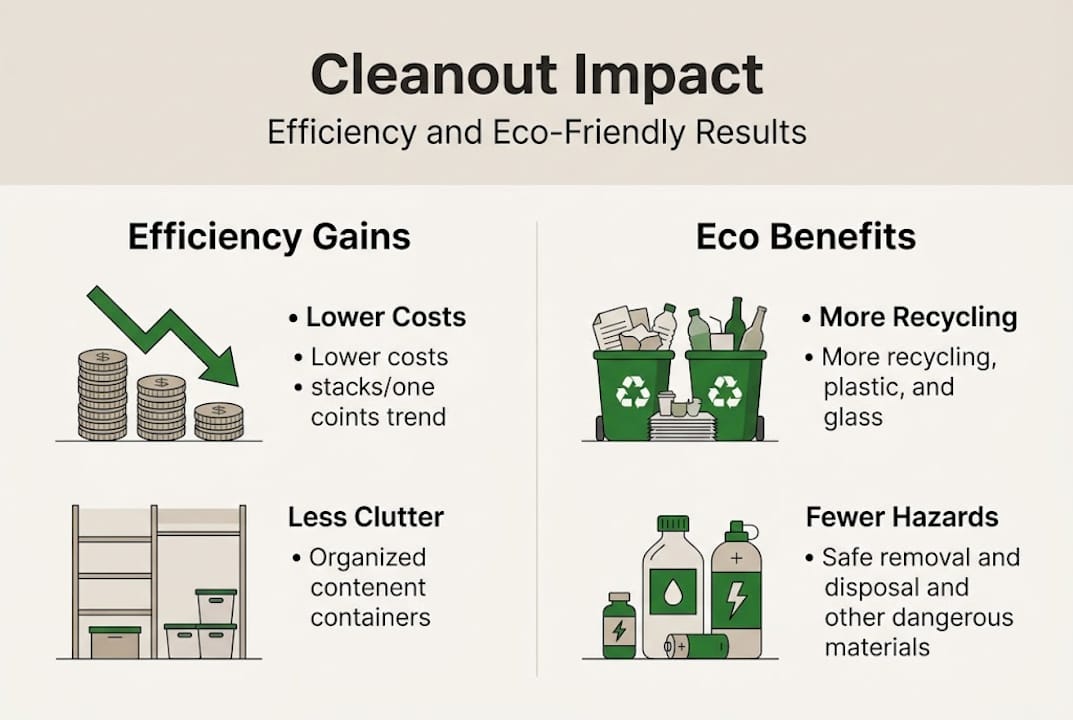
Massachusetts has some of the most progressive environmental policies in the country. The state has set aggressive recycling and waste diversion goals, and regular cleanouts play a direct role in helping residents and businesses meet those targets.
When you clean out on a schedule, you’re not rushing. That means you have time to sort, donate, and recycle properly rather than tossing everything into a single load headed for the landfill. That difference matters both for the environment and for your wallet.
Item type | Proper handling method | Environmental impact if landfilled |
Electronics (e-waste) | Certified e-waste recycler | Heavy metal contamination |
Appliances | Freon recovery, metal recycling | Greenhouse gas release |
Furniture | Donation, upcycling | Significant landfill volume |
Yard waste | Composting, green waste programs | Methane from decomposition |
Paint and chemicals | Hazardous waste drop-off | Soil and water contamination |
Regular cleanouts make it easier to identify items that can be donated to local organizations, extending the life of usable goods and reducing the demand for new products. Furniture, clothing, and working appliances are often accepted by shelters and nonprofits throughout Massachusetts.
Pro Tip: Many homeowners forget that items like old cell phones, ink cartridges, and small batteries qualify for special recycling programs. Keeping a small bin labeled for these items during your cleanout makes it easy to separate them before the removal crew arrives.
Avoiding hazardous item disposal mistakes is one of the most important parts of any eco-friendly cleanout. Improper disposal of chemicals, batteries, or electronics causes lasting environmental damage and can expose you to fines. Working with a service focused on sustainable junk removal ensures that materials are handled through the right channels every time. Building on the eco-friendly approach, let’s examine what to look for in a Massachusetts junk cleanout service.
Choosing the right cleanout solution in Massachusetts
Not every junk removal company is the same, and in Massachusetts, the stakes are high enough that choosing the wrong provider can cost you. Here’s what to look for before you book:
Licensed and insured crews are non-negotiable. Accidents on your property become your problem if the team isn’t properly covered.
Eco-friendly disposal practices should be a stated part of the company’s process, not just a marketing phrase.
Transparent pricing means getting a clear quote before work starts, with no hidden fees for heavy items or extra labor.
Hazardous material experience matters. Massachusetts law requires licensed professionals for certain hazardous waste removal. Not every company qualifies.
Same-day or flexible scheduling is a sign of an organized, well-staffed operation, not a gimmick.
Customer reviews and local reputation tell you more than a website ever will. Look for patterns in feedback around reliability and transparency.
“The cheapest quote rarely reflects the actual cost. Hidden fees, unlicensed crews, and improper disposal can turn a bargain into a liability.”
Exploring types of junk removal services available to homeowners helps you understand the full range of what a reputable company should offer. From full garage cleanouts to appliance removal and construction debris, knowing what’s possible lets you ask better questions. You can also look at junk removal service examples specific to Massachusetts to benchmark what professional service looks like in practice.
Avoid companies that can’t provide proof of insurance, won’t give a written estimate, or are vague about where your items will end up. A trustworthy provider should be able to tell you exactly which items will be recycled, donated, or disposed of at a licensed facility. Having mapped out how to choose the right solution, let’s consider a unique take on why so many Massachusetts property owners delay this task and what truly solves the problem.
Our perspective: Why waiting to schedule cleanouts rarely pays off
After working with countless homeowners, landlords, and business operators across Massachusetts, we’ve noticed a consistent pattern. People wait until the problem is impossible to ignore. A garage so full it can’t fit a car. A storage unit that’s costing hundreds a month but holding things no one actually needs. An office that feels chaotic but nobody knows where to start.
Here’s what most cleanout guides won’t tell you: the cost of waiting isn’t just measured in dollars. It’s measured in missed opportunities. A clean, functional space isn’t just easier to live or work in. It actively opens up what’s possible. A reclaimed garage becomes a workshop, gym, or rental opportunity. A cleared office floor plan enables a team expansion or a new workstation setup.
Crisis cleanouts also carry a premium. Emergency pricing, rushed decisions about what to keep, and the stress of coordinating a large removal under pressure all add up. The essential cleanout tips that consistently make the biggest difference share one thing in common: they’re planned, not reactive. Regularity isn’t just about compliance or cleanliness. It’s about keeping your options open.
Need help with your next Massachusetts cleanout?
Regular cleanouts keep your property compliant, organized, and eco-friendly without the stress of doing it all at once.
Whether you’re a homeowner in Reading, MA looking to reclaim your garage, or a business owner in Essex County needing a full commercial cleanout, Junk Dispatch is ready to help. We offer same-day service, free estimates, and eco-friendly disposal you can count on. Our insured crews handle everything from furniture and appliances to yard waste and construction debris. Visit Junk Dispatch today to book your cleanout or get a free quote. A clutter-free space is one phone call away.
Frequently asked questions
What happens if I don’t schedule regular cleanouts in Massachusetts?
You risk fines for improper refuse disposal under state health code, along with serious health hazards from accumulated junk that attracts pests and mold.
How often should a home or business schedule cleanouts?
Most experts recommend at least one to two cleanouts per year, but high-traffic properties such as rental units, warehouses, or restaurants may need quarterly service to stay compliant and organized.
What types of items require special handling or disposal in MA?
Hazardous waste, electronics, and bulky appliances must be handled by licensed professionals according to state law, since improper disposal can result in fines and environmental harm.
How do regular cleanouts support sustainability?
Scheduled cleanouts give you the time to sort items properly, making it easier to recycle, donate usable goods, and keep recyclable materials out of the landfill, which directly supports Massachusetts environmental goals.
Recommended
Comments