What is debris removal? A Massachusetts guide for homeowners
- Joe Lusso
- May 5
- 9 min read

TL;DR:
Debris removal in Massachusetts involves strict local and state regulations that vary by municipality. Proper sorting and documentation are essential to avoid fines, rejected pickups, and legal liabilities, especially for construction, yard, and bulky waste. Choosing licensed, compliant services that transparently handle and document disposal protects property owners from environmental and legal risks.
Most people assume debris removal is simple. You call someone, they haul it away, done. But in Massachusetts, that thinking can lead to fines, rejected pickups, and legal headaches you never saw coming. Massachusetts sanitation regulation 105 CMR 410.560 makes it clear that disposal of refuse and bulk items is regulated at the local and municipal level, which means the rules vary by town and the responsibility doesn’t always end when the truck pulls away. This guide breaks down exactly what debris removal means, what happens to your waste, how to stay compliant, and how to choose a service you can actually trust.
Table of Contents
Key Takeaways
Point | Details |
Not all debris is the same | Massachusetts law distinguishes between types of debris, affecting how each must be sorted and disposed. |
Know local rules | Your town’s separation and collection rules can differ—even for yard waste and bulk items. |
Choose compliant services | Ask any debris removal company to explain their compliance with Massachusetts regulations, including documentation and end destination. |
Cutting corners risks fines | Incorrect sorting or unauthorized dumping can lead to fines, rejected pickups, or long-term liability. |
Documentation protects you | Proper paperwork ensures your debris is handled legally and shields you from responsibility if disputes arise. |
What does debris removal really mean?
Debris removal sounds self-explanatory until you realize the term covers an enormous range of materials, each with its own handling requirements and disposal rules. In practical terms, debris removal is the collection, transport, and proper disposal of unwanted or waste materials from a property. That includes everything from old furniture and appliances left behind after a renovation to concrete rubble from a demolished patio or branches from a storm-damaged yard.
The type of debris matters enormously because it determines how the material must be sorted, where it can legally go, and who bears responsibility for proper disposal. Massachusetts treats a bag of yard clippings very differently than it treats a pile of drywall from a kitchen gut. Understanding construction debris definitions upfront saves you from unexpected costs or compliance problems later.
Here is a quick comparison of the three main debris categories property owners in Massachusetts typically encounter:
Debris type | Common examples | Typical disposal route | Special handling required? |
Household junk | Furniture, appliances, clothing, boxes | Recycling, donation, landfill | Sometimes (e-waste, refrigerants) |
Yard debris | Branches, leaves, grass clippings, stumps | Composting, yard waste facilities | Often (seasonal municipal rules) |
Construction and demolition (C&D) | Drywall, lumber, concrete, roofing materials | Specialized C&D facilities | Yes (state-mandated) |
Key facts to know about each category:
Household junk often contains items that qualify for donation or recycling before any landfill disposal.
Yard debris is frequently regulated by season, and many Massachusetts towns prohibit mixing it with regular trash.
C&D debris is the most heavily regulated category and cannot be freely mixed or dumped at a standard landfill.
Per Massachusetts sanitation regulation 105 CMR 410.560, bulk items, yard waste, and recyclables may each require separation and must follow municipal rules, meaning your responsibility as a property owner doesn’t end at the curb.
Understanding Massachusetts debris regulations
Massachusetts operates on two regulatory layers: state rules that set the floor, and municipal rules that can raise the bar further depending on where you live. Ignoring either layer can cost you.
At the state level, the Massachusetts Department of Environmental Protection (MassDEP) sets disposal requirements and waste bans. The MassDEP’s C&D Minimum Performance Standard establishes specific performance requirements and disposal bans that constrain what debris handlers can do and where mixed construction and demolition waste can end up. That means not every facility can accept every type of debris, and professionals who don’t follow these rules can create liability for their clients.
At the municipal level, your city or town may have its own requirements on top of state rules. Some towns require you to separate recyclables from general trash even for bulk pickups. Others restrict what day or how yard waste can be placed at the curb. Still others require special stickers or permits for oversized or heavy debris. Massachusetts sanitation regulation 105 CMR 410.560 confirms that disposal practices for refuse and bulk items are regulated at the local level, so your neighbor one town over may be playing by different rules.
Waste category | State-level requirement | Municipal additions common? |
C&D debris | Disposal bans, MPS compliance | Yes, permit or separation rules |
Yard waste | Cannot mix with solid waste | Yes, seasonal restrictions |
Recyclables | Mandatory recycling programs | Yes, specific item lists vary |
Bulk/large items | Separation from regular trash | Yes, collection schedule rules |
Hazardous waste | Special facility required | Yes, local drop-off events |
“The end destination for your debris isn’t a minor detail. Under Massachusetts law, where waste goes and how it’s categorized is a documented requirement, not a suggestion.”
Steps to stay compliant when planning a debris removal project:
Identify your debris type before scheduling any pickup or container delivery.
Check your town’s specific rules on their municipal website or by calling the DPW office directly.
Ask your removal service whether they hold the proper licenses and use MassDEP-compliant facilities.
Request documentation showing where each debris category will end up.
Separate debris proactively when possible, especially if your project mixes yard waste, recyclables, and C&D materials.
Understanding the C&D debris legal requirements specific to your project type will save you time and protect you from penalties. For larger projects, following a structured efficient debris removal guide is the most reliable way to stay on track.
Pro Tip: Call your town’s Department of Public Works before scheduling any large debris removal. Ask specifically about separation requirements, prohibited materials, and whether your project type requires any special permits or notifications.
What happens to your debris? Sorting, recycling, and disposal
Once a professional crew loads your debris onto the truck, most homeowners stop thinking about it. But understanding what happens next matters both legally and practically, especially in Massachusetts where documentation requirements can follow you down the line.
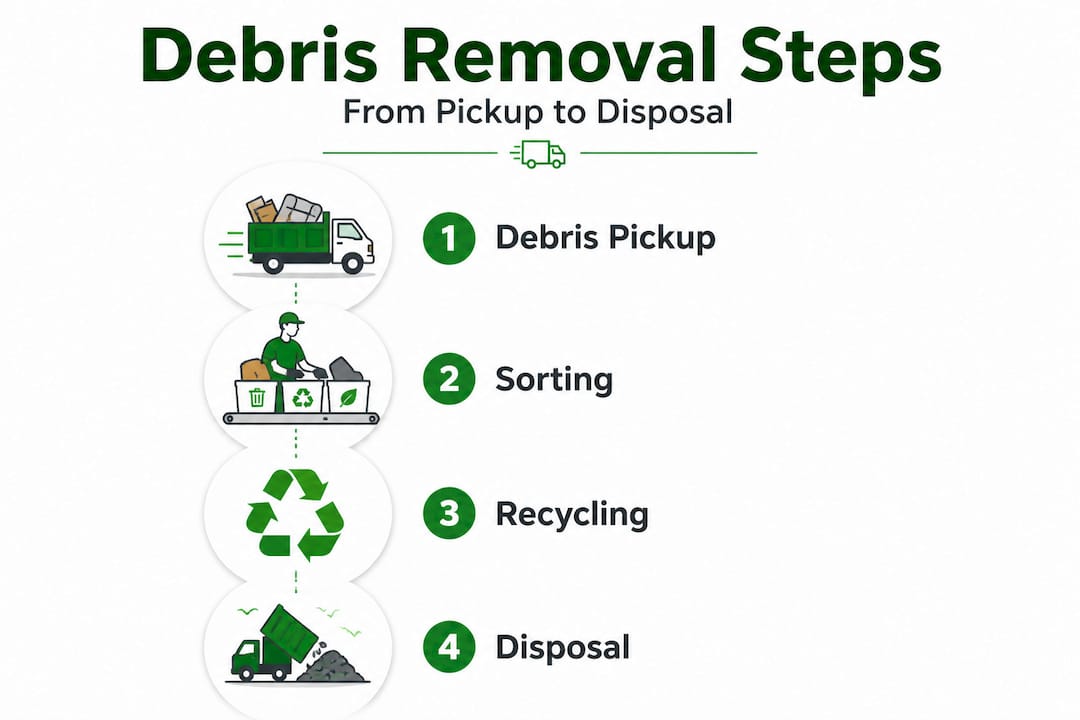
A reputable debris removal company does not simply dump everything at the nearest landfill. The process involves sorting, routing materials to the right facilities, and in many cases providing documentation that proves compliance. Massachusetts C&D Minimum Performance Standard rules require that debris handlers categorize waste into recyclable, reusable, hazardous, and non-hazardous streams, and send each stream to the appropriate facility. What happens at that facility, and whether it meets state standards, matters under Massachusetts law.
Here is what typically happens to different types of debris after pickup:
Clean wood and lumber is often chipped into mulch or sent to biomass energy facilities.
Metal from appliances or structural materials goes to scrap metal recyclers, which actually offsets some disposal costs.
Concrete and masonry is crushed and recycled as aggregate fill for road or construction projects.
Drywall can be recycled back into new wallboard products when clean and separated properly.
Yard waste goes to composting facilities where it becomes mulch or soil amendment products.
Furniture and usable household items may be donated to local organizations before anything goes to landfill.
Hazardous materials like old paint, solvents, or treated wood must go to licensed hazardous waste facilities and cannot be mixed with general debris.
True landfill waste is what remains after all recyclable and reusable materials are pulled out.
That last point is important. A good provider doesn’t just fill a landfill truck and drive away. They work to divert materials, reduce waste, and stay within eco-friendly debris disposal guidelines that Massachusetts increasingly expects from licensed haulers.
Pro Tip: When you book a debris removal service, ask specifically what percentage of your debris they typically divert from landfills. Ask them to name the facilities they use. Reputable companies answer these questions directly. Vague answers are a red flag. You can also review debris recycling tips to learn what to sort before the crew arrives, which can lower your costs and increase diversion rates.
Choosing the right debris removal service in Massachusetts
Not every truck with a trailer is a compliant debris removal service. In Massachusetts, the gap between a legitimate hauler and a fly-by-night operation can mean the difference between a clean property and a future liability sitting in a non-compliant landfill with your address attached to the paperwork.

Massachusetts C&D waste disposal bans and MassDEP performance standards mean that the “end destination” for your debris is a legal matter, not just a logistics detail. When you hire a service, you are trusting them to handle that responsibility correctly. Getting this wrong creates real risks for homeowners and property managers.
Questions and checks to run before signing with any debris removal service:
Are they licensed and insured in Massachusetts? Ask for proof of insurance and any required state or local licenses.
What facilities do they use? They should name specific, MassDEP-compliant disposal or recycling facilities.
How do they separate debris? They should describe a clear sorting process for recyclables, hazardous items, reusables, and general waste.
Do they provide documentation? Ask for a waste manifest or receipt showing where materials ended up.
What is their policy on prohibited materials? A compliant service will refuse to haul certain items or will redirect them properly.
Do they have experience with your specific debris type? A company that primarily handles household junk may not have the right setup for a large C&D cleanout.
Is their pricing transparent and itemized? Hidden fees often signal a service cutting corners elsewhere too.
For commercial projects or mixed-use jobs, following a step-by-step commercial debris guide helps you ask the right questions at each phase of the project. The stakes are higher for commercial sites where debris volumes are larger and compliance documentation is more critical.
Pro Tip: Insist on written confirmation that your debris will go to compliant facilities. If a provider is unwilling to put their disposal practices in writing, that is your signal to look elsewhere. The paper trail protects you, not just them.
The overlooked headache: Why cutting corners in debris removal can cost you
Here is what we see repeatedly in Massachusetts: a property owner hires the cheapest service they can find, the debris disappears, and everything seems fine until it doesn’t. A rejected pickup triggers a municipal complaint. An illegal dump gets traced back to an address on the paperwork. A contractor discovers that the “disposed” construction waste was never processed legally, and now there is a chain of liability pointing straight back to the original property owner.
The uncomfortable truth is that Massachusetts has one of the more detailed regulatory environments for waste and debris handling in New England. The MassDEP C&D disposal bans and performance standards constrain exactly what handlers can do and where waste can end up. These are not bureaucratic formalities. They exist because improper debris disposal creates real environmental harm, from groundwater contamination to illegal fill sites that damage ecosystems and devalue neighboring properties.
We have seen the aftermath of “fast and cheap” debris removal, and the pattern is consistent. The people who get stung are almost always the ones who didn’t think the details mattered. They assumed debris removal was just physical labor. It’s not. It is a regulated service with legal obligations attached to every load.
Understanding why compliance matters in debris removal is not about fear. It is about making a decision once that protects you permanently. Proper documentation costs nothing extra when you hire the right service. The absence of that documentation, however, can resurface as a problem years after the debris is gone.
Our honest advice: treat debris removal the same way you treat hiring an electrician or a plumber. Ask for credentials, ask for documentation, and don’t let price be the only factor. The cheapest option often externalizes its costs onto your property record and your peace of mind.
Massachusetts debris removal made simple — Next steps
Armed with a clear picture of debris types, state regulations, and what to ask any provider, you are already ahead of most property owners when they start this process. The last step is finding a service that actually handles all of it for you, from sorting to documentation to eco-conscious disposal.
At Junk Dispatch, we operate throughout Massachusetts with crews that understand local municipal rules and MassDEP compliance requirements. Whether you need a garage and attic cleanout, a full yard waste haul, or a construction site cleanout, we provide upfront pricing, clear documentation, and transparent disposal practices from the first call to the final receipt. We serve clients across the region, including Reading debris removal and broader Essex County junk hauling needs. Book online, get a free estimate, and let us take the regulatory burden off your plate entirely.
Frequently asked questions
What types of debris require special handling in Massachusetts?
Construction and demolition debris, yard waste, recyclables, and bulk items all require specific separation and disposal per local rules. Per Massachusetts sanitation regulation 105 CMR 410.560, property owners retain responsibility for ensuring proper separation and placement even when hiring a third party.
Are there fines for not separating debris properly?
Yes, property owners may face fines or rejected pickups if local separation rules are not followed. Individual municipalities set their own enforcement policies on top of state minimums.
How can I tell if a debris removal company is compliant?
Ask about their sorting process, recycling rates, and end destination facilities, and request written documentation. Per MassDEP’s C&D Minimum Performance Standard, compliant providers should be able to name specific facilities and describe how they separate hazardous, recyclable, and non-hazardous waste streams.
Does every town in Massachusetts have its own debris rules?
Yes, cities and towns set their own requirements in addition to state law for debris removal and separation. Massachusetts sanitation regulation 105 CMR 410.560 confirms that municipal-level rules govern collection, placement, and separation requirements, so always verify with your local DPW before scheduling any major cleanout.
Recommended
Comments