Top ways to recycle household items for a greener home
- Joe Lusso
- Apr 15
- 9 min read

TL;DR:
Massachusetts has strict recycling rules banning textiles, mattresses, and hazardous waste from landfills.
Curbside recycling typically accepts paper, glass, metal, and certain plastics, but many items cause contamination.
Proper disposal involves donation, special collection events, or recycling programs for items like electronics, textiles, and bulky waste.
Recycling sounds simple until you’re standing in your kitchen holding a broken blender, a bag of old clothes, and a dead laptop, wondering where each one actually goes. Massachusetts has some of the most progressive waste management rules in the country, including outright bans on tossing textiles and mattresses in the trash, but those rules change by town and evolve every year. If you’ve ever tossed something in the blue bin and quietly hoped for the best, this guide is for you. We’ll break down exactly what goes where, which tools to use, and how to make sustainable choices that go beyond the recycling bin.
Table of Contents
Key Takeaways
Point | Details |
Check local guidelines | Recycling rules and programs differ by Massachusetts town—always start with official resources. |
Use special recycling options | Many household items like mattresses, textiles, and electronics require drop-off or events, not curbside recycling. |
Donate before you recycle | Maximize sustainability by choosing donation and reuse for usable items whenever possible. |
Avoid common mistakes | Never bag recyclables or include hazardous items in curbside bins to prevent contamination and fines. |
Leverage online tools | Online tools like Beyond the Bin make it easy to find where to recycle almost any household item in Massachusetts. |
Understanding what can be recycled curbside
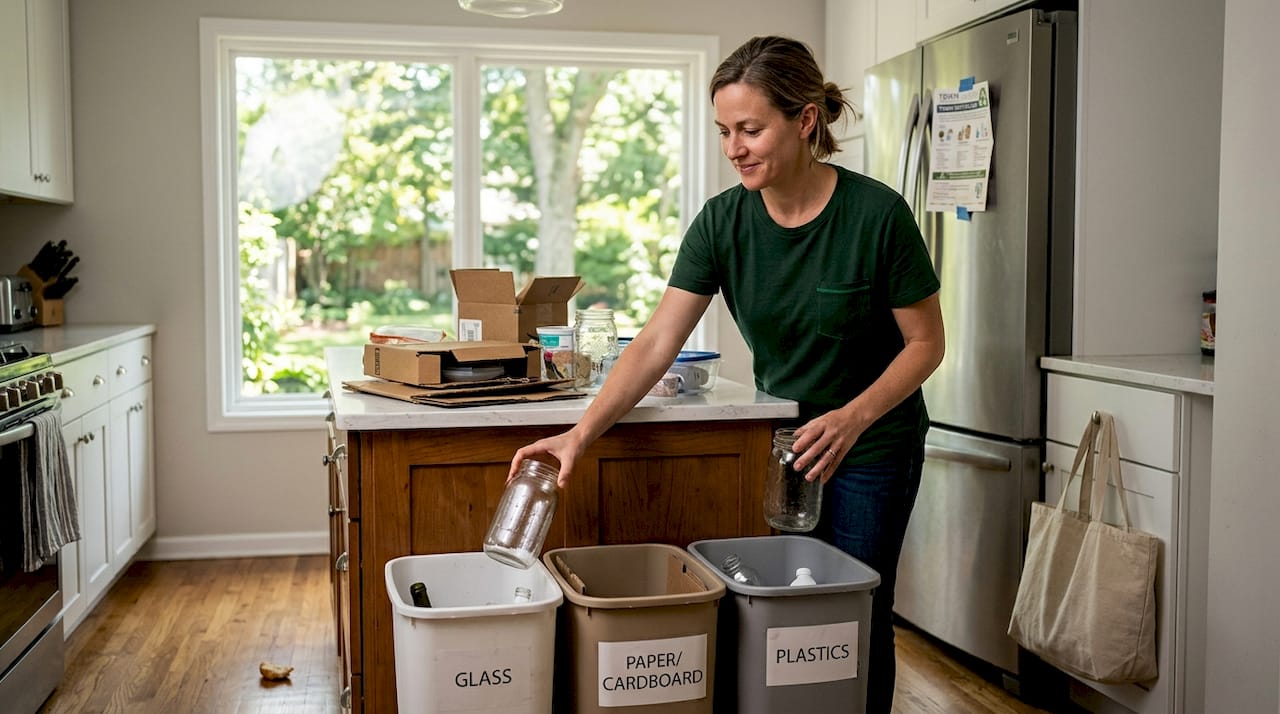
Most Massachusetts households have access to single-stream recycling, which means all accepted recyclables go into one bin without sorting. It’s convenient, but it comes with rules that many people overlook.
Single-stream curbside recycling is standard in most Massachusetts municipalities and accepts the following:
Paper and cardboard (flattened)
Glass bottles and jars (empty and rinsed)
Metal cans (aluminum and steel)
Plastic bottles, jugs, and tubs (empty, rinsed, caps on)
That list is shorter than most people expect. Plenty of items look recyclable but aren’t accepted curbside, including plastic bags, styrofoam, greasy pizza boxes, and anything smaller than a credit card. These items cause real problems. Plastic bags, for example, wrap around sorting machinery and shut down entire facilities.
Common mistakes to avoid:
Bagging recyclables in plastic bags before putting them in the bin
Tossing food-soiled containers without rinsing
Including shredded paper loose (it clogs equipment; bag it separately or compost it)
Mixing in electronics, batteries, or light bulbs
Assuming all plastics are accepted (only bottles, jugs, and tubs)
Statistic: Recycling contamination rates in Massachusetts have been a persistent challenge, with some programs reporting contamination levels above 20%, which drives up processing costs and reduces the value of recovered materials.
Pro Tip: When in doubt, use the Beyond the Bin tool to search any item and find out exactly where it belongs in your town. It takes 30 seconds and saves a lot of guesswork.
Local rules matter more than you’d think. Some towns accept cartons; others don’t. Some have switched collection schedules or added organics programs. Always check your municipality’s current guidelines before assuming what you knew last year still applies. Understanding the benefits of recycling bulky items can also motivate you to handle larger pieces correctly from the start.
Special recycling for textiles, mattresses, and bulky items
Massachusetts has gone further than most states when it comes to keeping certain items out of the landfill. Two categories that surprise a lot of homeowners are textiles and mattresses.
Textiles include clothing, shoes, linens, towels, and curtains. Since 2022, textiles are banned from the trash in Massachusetts, regardless of condition. That means even worn-out socks or a torn bedsheet cannot legally go in your garbage. The good news is that options are widely available.
How to recycle or donate textiles:
Donate wearable items to thrift stores, shelters, or clothing drives
Drop unwearable textiles at designated collection bins (often found at grocery stores or municipal facilities)
Use mail-in programs from brands like H&M or TerraCycle for hard-to-place items
Separate clean from soiled textiles before drop-off
Pro Tip: Even items that feel too worn to donate often have value as industrial rags or insulation material. Textile recyclers accept them, so don’t assume something is trash just because it’s old.
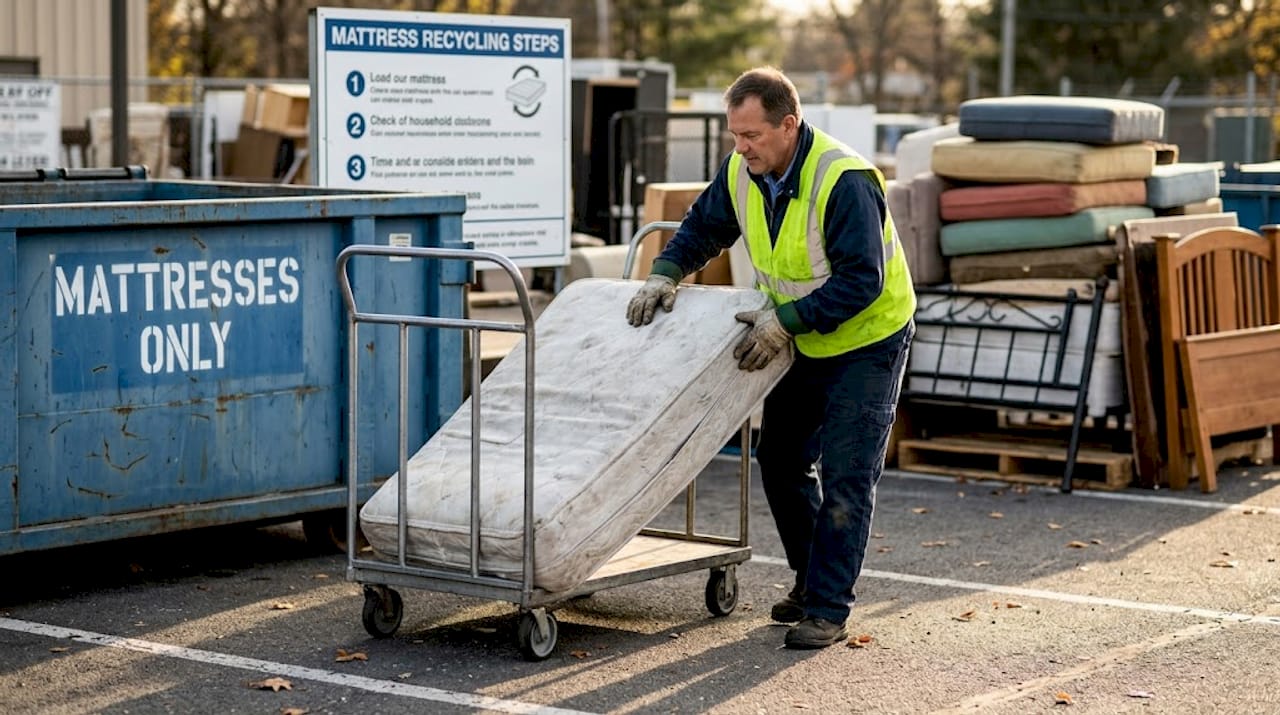
Mattresses and box springs are also banned from curbside disposal in Massachusetts. Thousands of mattress units are diverted from landfills each year through state-supported recycling programs. If you’re not sure where to bring yours, check out options for donating mattresses in Massachusetts or use the donation and recycling locations finder.
Item | Curbside? | Best option |
Clothing (wearable) | No | Donate to thrift store or shelter |
Clothing (worn out) | No | Textile recycling bin |
Mattress/box spring | No | Municipal program or approved recycler |
Furniture | No | Donation center or bulk pickup |
Rugs and curtains | No | Textile bin or donation |
For other bulky items like couches or large appliances, most towns offer scheduled bulk pickup days or drop-off events. Call your local DPW (Department of Public Works) to confirm your options before leaving anything at the curb.
How to recycle electronics, appliances, and hazardous items
This is where recycling gets more complicated, and where mistakes can have real environmental consequences. Electronics, appliances, and household chemicals all need special handling.
Steps for electronics and appliance disposal:
Check if the item still works. Donate it if so.
Remove any personal data from phones, computers, or tablets before recycling.
Do not place electronics or appliances curbside. They require special collection handling, including CRT (cathode ray tube) TV bans and Freon removal requirements for refrigerators and AC units.
Find your town’s electronics drop-off day or an approved retailer take-back program.
For large appliances containing refrigerants, confirm the recycler is certified to handle them.
Item | Curbside? | Where to take it |
CRT TV/monitor | No | Special collection event |
Flat-screen TV | No | Retailer take-back or e-waste event |
Refrigerator/AC | No | Certified appliance recycler |
Laptop/phone | No | Retailer program or e-waste drop-off |
Batteries (AA, AAA) | No | Retail drop-off bin |
Paint | No | HHW event or PaintCare drop-off |
“Proper disposal of household hazardous waste protects our water supply, soil, and the workers who handle our waste. Never pour chemicals down the drain or toss them in the trash.”
For household hazardous waste (HHW) like pesticides, solvents, fluorescent bulbs, and motor oil, Massachusetts municipalities host seasonal collection events. Availability varies by town, so check your schedule early in the year. Some areas have permanent drop-off facilities, while others only offer one or two events annually.
Handling these items correctly is a core part of eco-friendly junk removal. If you’re clearing out a garage or basement, planning ahead for hazardous items will save you a lot of stress. Learning to approach managing junk efficiently means sorting these categories before you start hauling anything out.
Tools, resources, and advanced recycling strategies
Knowing the rules is one thing. Having the right tools to act on them is another. Massachusetts residents are lucky to have several strong resources available.
Top tools and resources:
Beyond the Bin Search Tool: Search any item to find local drop-off and recycling options
Recyclopedia: A searchable database for items not accepted in standard bins
Your city or town’s DPW website: Often has the most current local schedules and accepted items
Retailer take-back programs: Best Buy, Staples, and Home Depot all accept certain electronics and batteries
Use official tools like Beyond the Bin and Recyclopedia for anything that doesn’t fit neatly into your bin, and always call ahead to confirm before making a trip.
Beyond tools, the biggest shift you can make is reducing and reusing before you recycle. Recycling still uses energy and resources. Donating a working appliance or repurposing a piece of furniture keeps those materials in use longer and creates zero processing waste.
Pro Tip: Before recycling anything, ask yourself: could someone else use this? Marketplace apps, local Buy Nothing groups, and Habitat for Humanity ReStores are all great outlets for items that still have life in them.
Massachusetts has set ambitious recycling and waste diversion goals, with expanded producer responsibility (EPR) programs and a growing focus on organics diversion. Composting food scraps, for example, is now available in many municipalities and keeps a significant portion of household waste out of landfills. Check if your town offers curbside organics pickup or a drop-off site. To see the full range of examples of recycling services available in Massachusetts, it helps to start with your local options and expand from there.
Quick reference: Comparison of recycling options
Not every recycling route works for every item. Here’s a side-by-side look at your main options.
Route | What it accepts | Best for | Key rule |
Curbside | Paper, cardboard, glass, metal, plastic bottles | Everyday recyclables | No bags, rinse items |
Drop-off | Textiles, electronics, HHW | Items banned from trash | Call ahead to confirm |
HHW event | Paint, chemicals, batteries, bulbs | Hazardous materials | Seasonal availability |
Special collection | Appliances, CRT TVs, mattresses | Large or regulated items | Check local schedule |
Donation/reuse | Working items in any category | Extending product life | Clean and functional |
Do’s and don’ts by route:
Curbside: Do rinse containers. Don’t bag recyclables in plastic.
Drop-off: Do confirm hours and accepted items. Don’t assume all locations accept the same things.
HHW events: Do register in advance if required. Don’t mix chemicals before drop-off.
Donation: Do clean items before dropping off. Don’t donate broken or unsafe items.
Because municipal rules vary significantly across Massachusetts, what works in Boston may not apply in Worcester or Springfield. Always verify locally. When you’re dealing with recycling large items, the comparison table above can help you choose the right path quickly.
A better way to think about household recycling
Here’s something most recycling guides won’t tell you: recycling should be your last resort, not your first. The standard advice focuses heavily on what bin to use, but the bigger environmental win comes from buying less, reusing more, and donating before you recycle.
We’ve seen Massachusetts homeowners feel good about filling a blue bin while ignoring the fact that the item could have been repaired, donated, or simply not purchased in the first place. Recycling is important, but it’s the bottom rung of the sustainability ladder, not the top.
The other thing worth saying out loud: over-focusing on recycling can actually distract from bigger wins. Composting food waste, buying secondhand, and refusing single-use packaging all have a larger per-action impact than sorting plastics. That doesn’t mean recycling doesn’t matter. It does. But it works best as part of a broader habit, not a standalone solution.
Stay curious about your town’s programs. Push your local government for better composting access and more frequent HHW events. Use the tools available. And if you want a deeper look at sustainability in everyday junk removal, the resources are there. Recycling is a floor, not a ceiling.
Let us make clutter-free, sustainable living easy
Sometimes recycling every item yourself isn’t realistic, especially when you’re dealing with a full garage cleanout, old appliances, or a mix of items that each need a different drop-off location.
Junk Dispatch handles the heavy lifting for Massachusetts homeowners and renters who want to declutter responsibly. Our insured crews sort, haul, and route items to the right recycling facilities, donation centers, and disposal sites so you don’t have to figure it out alone. Whether you need Reading junk removal services or a full Essex County junk cleanup, we bring local knowledge and an eco-conscious approach to every job. Book online, get a free estimate, and let us handle the rest.
Frequently asked questions
How do I find local recycling rules in my Massachusetts town?
Use the Beyond the Bin tool alongside your town’s official website to get current recycling instructions, accepted items, and upcoming collection events specific to your municipality.
Can I recycle old clothing or shoes in the trash?
No. Textiles are banned from trash in Massachusetts since 2022, so donate wearable items or drop all textiles, even worn-out ones, at designated recycling bins or centers.
Where do I bring old TVs, appliances, or electronics?
Take them to municipal special collection events or approved drop-off centers, since electronics and appliances are not accepted curbside and have specific handling requirements.
Are mattresses and box springs accepted in curbside recycling?
No. Mattresses must be recycled through designated municipal programs or approved recycling facilities, not left at the curb or placed in standard trash.
What happens if I put recyclables in plastic bags?
Plastic bags are not accepted in curbside recycling because they jam sorting machinery; bring them instead to grocery store drop-off bins designated for film plastic collection.
Recommended
Comments