Common Commercial Debris Types in Massachusetts: A Guide
- Joe Lusso
- 6 days ago
- 9 min read

TL;DR:
Massachusetts enforces strict bans on landfill disposal of asphalt, brick, concrete, wood, and metals to promote recycling. Proper debris sorting and vendor selection are essential to ensure compliance, reduce costs, and meet recycling targets. Working with experienced local experts helps businesses efficiently manage complex waste streams and avoid penalties.
Massachusetts businesses operate under some of the strictest construction and demolition debris regulations in the country, and getting caught on the wrong side of those rules is expensive. Property managers, contractors, and business owners face real pressure to identify exactly what they’re throwing out, sort it correctly, and route it to the right facilities before a single load leaves the job site. This guide breaks down the major commercial debris categories, explains Massachusetts-specific bans and recycling mandates, and gives you a practical framework for keeping your projects compliant and your disposal costs predictable.
Table of Contents
Key Takeaways
Point | Details |
Know banned debris | Massachusetts outlaws landfilling common construction materials and metals, so proper sorting is required. |
Sort for compliance | Facility and C&D debris must be sorted and recycled to meet state mandates and avoid fines. |
Plan disposal routes | With no in-state C&D landfills, commercial debris usually goes to out-of-state processors. |
Special handling for organics | Businesses generating over 1 ton of organic waste weekly must arrange for organics recycling. |
Partner for better outcomes | Working with local, recycling-focused junk removal providers boosts diversion rates and streamlines compliance. |
Understanding Massachusetts regulations on commercial debris
The stakes here are not abstract. Massachusetts bans asphalt, brick, concrete, wood, and metals from landfill disposal, a policy in effect since 2006. Violating these bans exposes your business to fines, permit complications, and reputational damage with municipal clients. If you’re managing a renovation or cleanout and you let those materials slip into a general dumpster, you’re not just bending a rule. You’re triggering a paper trail that follows your license.
Beyond the basic landfill bans, Massachusetts also enforces recycling performance targets at the facility level. C&D processors must hit a 20% recycling rate or face MassDEP penalties, and those penalties get passed back through the supply chain. When transfer stations face fines, they tighten their intake policies, which means your loads get rejected if they’re not properly sorted. Understanding the disposal methods for construction debris in Massachusetts is not just helpful. It’s a core part of project planning.
Here are the commercial debris types Massachusetts specifically regulates:
Asphalt pavement and roofing (banned from landfill)
Concrete and masonry materials (banned from landfill)
Wood, including dimensional lumber and pallets (banned from landfill)
Ferrous and non-ferrous metals (banned from landfill)
Organic waste from facilities generating more than 1 ton per week
Electronics and universal wastes (regulated through separate e-cycling channels)
The rules for demolition debris in Massachusetts add another layer, particularly around asbestos-containing materials and lead paint in older structures. Knowing what you have before you start work prevents the most costly surprises.
Now that you understand the high stakes, let’s break down the exact types of commercial debris you’ll encounter.
Major categories of commercial debris in Massachusetts
Commercial debris does not fall into a single bucket. Different project types generate very different waste streams, and the regulatory treatment for each varies significantly. Broadly, commercial debris types include concrete, brick, asphalt, wood, metal, drywall, and masonry, but property managers and contractors also deal with facility-specific streams that require separate handling plans.
The main categories are:
Construction and demolition (C&D) materials: concrete, asphalt, brick, dimensional wood, metals, gypsum board, glass, and masonry
Facility furniture and fixtures: office chairs, desks, shelving, display units, and built-in cabinetry
Electronics and e-waste: computers, monitors, printers, servers, and commercial kitchen equipment controls
Bulk appliances and HVAC equipment: commercial refrigerators, air handlers, boilers, and rooftop units
Organic waste: food scraps, grease, and compostable materials from food service operations
Universal and hazardous waste: fluorescent bulbs, batteries, and small quantities of regulated chemicals
A well-structured step-by-step debris removal guide typically addresses each category separately because they require different containers, different destination facilities, and different documentation.
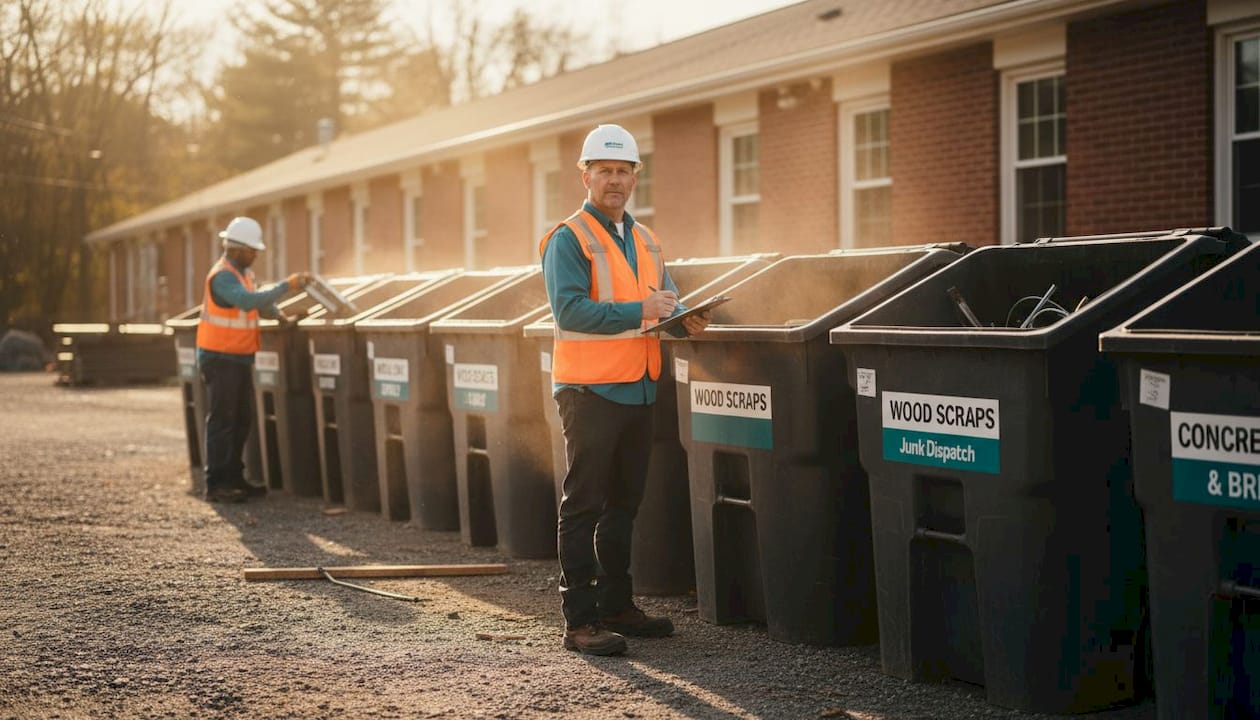
Pro Tip: Before any cleanout begins, walk the site and categorize debris by stream. Separate containers for metal, wood, and general waste can reduce your hauling costs by 15 to 30 percent by allowing processors to apply recycling credits to diverted materials.
The efficient removal guide for Massachusetts construction sites recommends that project teams assign one person specifically to debris oversight. When nobody owns the sorting process, mixed loads become the default, and mixed loads cost more to process. The role of junk removal in property management has expanded precisely because property managers need a partner who understands these distinctions, not just a truck that shows up.
Let’s dive deeper into each category and what makes them important from a disposal and recycling angle.
Construction and demolition (C&D) materials: Features and disposal
C&D debris is the heaviest volume stream in Massachusetts commercial projects. US C&D waste tops 600 million tons annually, with more than 90 percent coming from demolition rather than new construction. In Massachusetts specifically, there are no in-state C&D landfills, so nearly all of this material must leave the state for final disposal. That means transportation costs are baked into every project, and sorting on-site before the truck arrives is not optional. It’s how you control your budget.
Here’s a breakdown of the major C&D material types and how they’re managed:
Material | Recyclability | Landfill ban? | Typical destination |
Concrete | High | Yes | Crushed aggregate, road base |
Asphalt pavement | Very high | Yes | Hot-mix recycling plants |
Brick and masonry | High | Yes | Reclaimed or crushed fill |
Dimensional wood | Moderate to high | Yes | Mulch, biomass, or reuse |
Drywall/gypsum board | Moderate | No | Specialized processors |
Ferrous metals | Very high | Yes | Scrap yards |
Non-ferrous metals | Very high | Yes | Scrap yards (higher value) |
Glass | Moderate | No | Depends on type |
Metals are the easiest win on any job site. Copper, aluminum, and steel all carry positive market value, which means scrap dealers will often pay for them rather than charging you. Sorting metal out before your general haul reduces your overall load weight and generates a small return.
Concrete and masonry are heavy and cheap to recycle when sorted. Mixed with other materials, they become contaminated and harder to process. Keep them in a dedicated pile or container.
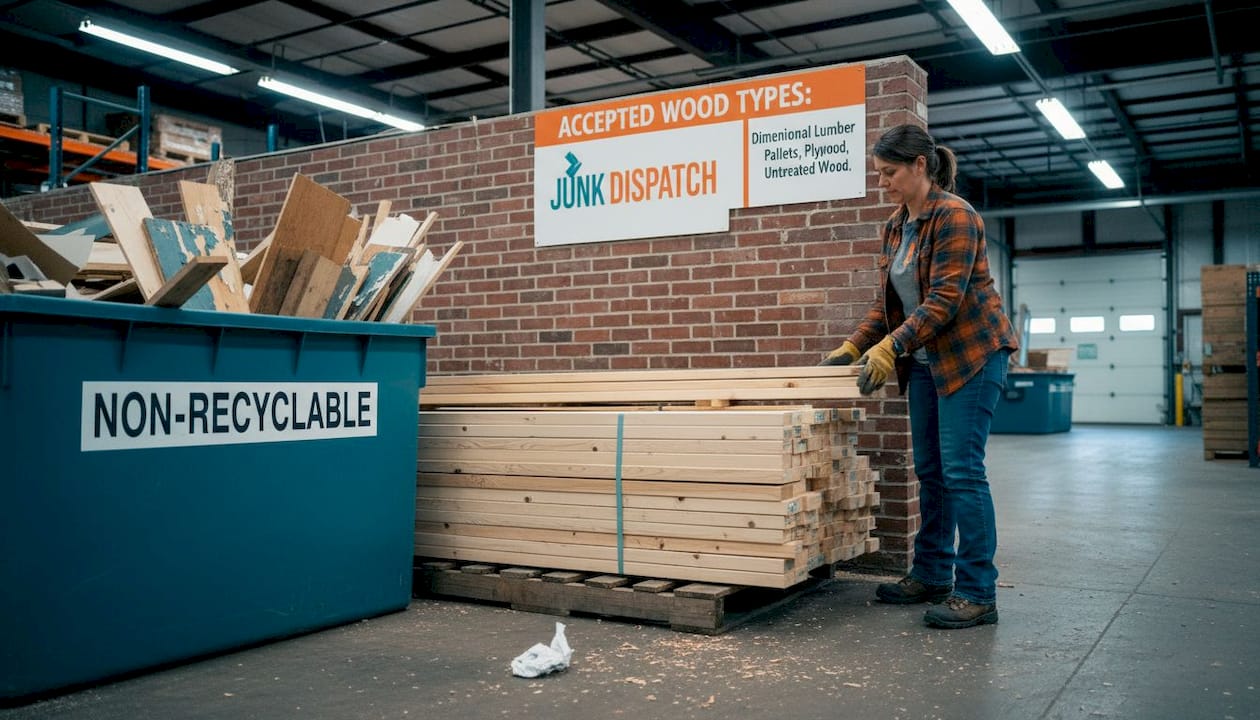
Wood requires attention to what type it is. Clean dimensional lumber can go to mulch processors or biomass facilities. Treated or painted wood has restrictions because of the chemicals it carries.
Pro Tip: Ask your removal vendor whether they accept mixed C&D loads or require separated streams. A vendor that separates on your behalf will often document diversion rates, which you may need for LEED compliance or permit closeouts. What counts as construction debris in a regulatory sense differs from what workers tend to throw in the nearest dumpster. Know the difference before your final inspection.
With C&D as the centerpiece, compare it to other commercial debris streams that property managers juggle.
Office, retail, and commercial facility debris: Beyond construction waste
When a business relocates, closes, or renovates its interior, the debris looks very different from a demolition site. You’re dealing with furniture, electronic equipment, lighting fixtures, kitchen equipment, and sometimes significant volumes of food organics. Each of these has a different compliance profile.
Typical facility debris streams include:
Office furniture: desks, chairs, filing cabinets, cubicle panels, conference tables
Commercial fixtures: shelving, display cases, lighting systems, signage
Electronics: computers, printers, networking hardware, point-of-sale systems
Food service organics: pre- and post-consumer food waste, cooking grease, compostables
The commercial organics ban applies to facilities generating more than 1 ton per week of organic material. Supermarkets, cafeterias, hospitals, and large hotels typically hit this threshold easily. Businesses that don’t actively manage their organic stream can face enforcement action that is separate from and in addition to their solid waste violations.
“Failing to sort organics is one of the most common compliance errors we see at commercial facilities, and it’s also one of the most avoidable. Organics composting services are widely available across Massachusetts.”
Electronics deserve special attention. E-cycling is regulated separately under Massachusetts law, and you cannot simply include computers or monitors in a junk removal load and expect them to be handled correctly. Specialized vendors are required. Choosing the wrong hauler here creates liability for your organization, not just the vendor.
Commercial junk removal examples show that office cleanouts often generate mixed loads of furniture, electronics, and general refuse. The best outcomes happen when clients stage these categories before the crew arrives. Even rough separation, furniture in one area and electronics in another, makes the removal faster and the compliance documentation cleaner.
Understanding why removing commercial debris promptly matters goes beyond compliance. Delayed debris removal creates safety hazards, reduces usable floor space, and signals neglect to tenants and inspectors alike.
After outlining main categories, compare how these materials stack up for recycling and compliance goals.
Comparison: Recycling and disposal options by debris type
Massachusetts bans and recycling rules make upfront sorting one of the highest-leverage activities on any commercial job. Here is a consolidated view of common commercial debris types and how they compare:
Debris type | Disposal outlet | Landfill ban | Recycling notes |
Concrete/masonry | Aggregate processors | Yes | Crushable, high diversion potential |
Metals | Scrap dealers | Yes | High market value, easy to sort |
Wood | Mulch/biomass facilities | Yes | Treated wood has restrictions |
Drywall/gypsum | Specialty processors | No | Wet or contaminated board is rejected |
Office furniture | Reuse centers, landfill | No | Donation diverts usable items |
Electronics | Licensed e-cyclers | No, but regulated | Must use approved vendors |
Organics | Composters, AD facilities | Yes (over 1 ton/week) | Requires dedicated container |
Asphalt | Hot-mix recyclers | Yes | Very high reuse rate |
Best practices for preparing each debris type before hauling:
Walk the site and identify each debris stream before any removal begins.
Set up labeled containers for at least three streams: metals, clean wood, and mixed C&D.
Remove electronics from all spaces before the general crew starts loading.
Document weights for each container, since processors will report these for compliance.
Photograph mixed or unusual loads in case of a dispute about contamination at the receiving facility.
Confirm your vendor’s diversion reporting, especially if you need documentation for permitting or certification purposes.
Pro Tip: Check out these debris removal tips to maximize recycling before your next project. Processors charge significantly more for contaminated or mixed loads, so a 30-minute sort at the start often saves hours of hassle and hundreds of dollars at the back end.
When selecting a commercial junk removal partner in Massachusetts, prioritize vendors who carry proof of insurance, can name the facilities they use, provide diversion rate documentation, and have specific experience with the debris types your project generates.
Let’s close with a fresh perspective on why getting debris sorting right pays off in Massachusetts.
Why most commercial debris plans in Massachusetts fall short
Here’s the uncomfortable reality: most businesses don’t have a debris plan. They have a phone number for a dumpster rental company. Those are not the same thing, and in Massachusetts, treating them as equivalent is how you end up with a MassDEP notice and a retroactive sorting bill.
The businesses that consistently handle commercial debris well share one trait. They treat debris management as part of project planning, not as a problem to solve after the crew starts swinging sledgehammers. The sorting decisions, the vendor selection, the container placement, all of it happens before day one. By the time debris is being generated, the workflow is already in motion.
The other consistent mistake is underestimating the organics stream. Food service businesses often focus entirely on their C&D or furniture debris during a renovation and completely overlook the ongoing organic waste obligation that kicks in at the 1-ton-per-week threshold. Getting hit with a violation for your organic stream while your construction project is running smoothly is a particularly frustrating outcome that is entirely preventable.
Working with real-world junk removal strategies that reflect actual Massachusetts regulations changes the financial picture too. Contractors who sort effectively reduce their disposal costs, document their diversion rates, and enter future projects with better vendor relationships and cleaner compliance records. Reputation in this space compounds. Clients notice when a contractor makes debris management look easy, and that becomes a selling point.
The investment in sorting, vendor vetting, and documentation is not a cost center. It’s risk management, and in Massachusetts, where enforcement is real and recycling targets are measurable, it pays for itself on nearly every project of meaningful scale.
Streamline commercial debris removal with local experts
Managing commercial debris in Massachusetts is genuinely complex, and trying to navigate the bans, recycling targets, and stream-specific rules without experienced support creates unnecessary risk.

Junk Dispatch specializes in exactly this work across Massachusetts. Our crews are trained on state disposal requirements and know how to sort, stage, and route C&D materials, office furniture, electronics, organics, and everything in between. We work with licensed processors for every debris category, and we provide diversion documentation so your records are clean. Whether you need junk removal in Reading, MA, full-scale commercial removal across Essex County, or specialized demolition debris removal for a complex teardown, we have the crew, the vehicles, and the facility relationships to handle it right. Request a free estimate today and get a debris plan built around your specific project needs.
Frequently asked questions
What are the main types of commercial debris banned from Massachusetts landfills?
Asphalt, brick, concrete, wood, and metals are all banned from landfill disposal under Massachusetts regulations, and this ban has been in effect since 2006.
Why does commercial debris in Massachusetts need to be sorted?
Sorting ensures banned items reach recycling facilities and helps processors meet the required 20% recycling rate mandated by MassDEP, which reduces your exposure to fines and load rejections.
What facilities are affected by the commercial organics ban in Massachusetts?
Facilities that generate more than 1 ton per week of organic waste, including supermarkets, large cafeterias, and hospitals, are required to divert organics from the landfill.
Where does most Massachusetts C&D debris go if not to state landfills?
Massachusetts has no in-state C&D landfills, so nearly all construction and demolition debris must be transported out of state for final disposal, making sorted loads more cost-effective.
How can a business increase its recycling rate for commercial debris?
Separate metals, wood, concrete, and electronics into dedicated containers on-site and partner with a removal provider who reports diversion rates and routes materials to licensed recycling processors.
Recommended
Comments