What Is Commercial Junk Removal and Why Massachusetts Businesses Rely On It
- Joe Lusso
- Jan 26
- 9 min read


A cluttered office can slow down even the most organized Massachusetts property manager. When every corner holds outdated equipment or piles of paperwork, finding a path to a cleaner, greener workspace can feel overwhelming. Commercial junk removal goes beyond simple hauling, tackling the unique demands of office cleanouts while meeting strict legal and environmental standards. Choosing a provider focused on sustainable disposal practices keeps your property compliant, supports community recycling, and lets your team focus on business, not waste.
Table of Contents
Key Takeaways
Point | Details |
Commercial Junk Removal Complexity | Commercial junk removal addresses specific waste types generated by businesses, requiring specialized handling and compliance with regulations. |
Legal and Environmental Compliance | Massachusetts law mandates strict compliance in waste disposal, which a professional removal service can help manage to avoid penalties. |
Cost Factors and Provider Selection | Costs vary based on volume and waste type, but choosing a compliant provider is crucial to avoid legal liability and ensure proper handling. |
Documentation and Transparency | Request detailed documentation from service providers to ensure compliance with environmental regulations and proper waste management practices. |
Defining Commercial Junk Removal Services
Commercial junk removal is the specialized process of collecting, transporting, and responsibly disposing of waste generated by businesses across Massachusetts. Unlike residential junk removal, which typically handles household items, commercial services tackle the unique debris streams created by offices, warehouses, retail locations, and industrial facilities. This includes everything from outdated office furniture and broken equipment to construction debris, file storage units, and operational waste. The scope extends far beyond simple hauling. Businesses generate specific types of waste that require different handling approaches, and commercial removal services are equipped to manage the complexity.
At its core, commercial junk removal services address a practical business problem: how to efficiently clear unwanted materials while maintaining compliance with local and federal regulations. According to the Global Waste Management Outlook 2024, commercial waste collection plays a critical role in waste prevention and environmental protection through sustainable disposal practices. Professional removal companies don’t simply dump debris into landfills. They implement sorting processes that identify items for recycling, donation, or proper hazardous waste handling. Your business gets a cleaner space, and materials get redirected away from landfills whenever possible.
What makes these services truly commercial rather than just large-scale residential work? The regulatory requirements. According to US regulations, commercial junk removal businesses must maintain detailed inventory of all items they handle to ensure legal and environmental compliance. This means documented tracking, proper disposal certifications, and adherence to federal standards that residential services rarely encounter. When you hire a commercial junk removal company for your Massachusetts office cleanout or warehouse purge, you’re getting professionals who understand liability, documentation requirements, and the specific waste streams your industry generates. They handle the administrative burden alongside the physical removal, allowing your team to focus on business operations rather than logistics.
Pro tip: Request documentation of how your junk removal provider will handle specific items before committing to service, especially for electronics and confidential materials, to ensure full compliance with your industry regulations.
Types of Commercial Junk Removed
Commercial properties across Massachusetts generate remarkably diverse waste streams. What your office discards looks completely different from what a warehouse clears out, which differs again from a retail renovation project. Understanding what types of junk commercial removal services handle helps you plan your cleanout and know what to expect when crews arrive. The variety is substantial, and each material type demands its own handling approach.
The most common categories include office furniture and equipment, such as desks, filing cabinets, cubicle systems, and outdated computers that no longer serve your business. Then there’s construction and demolition debris including drywall, flooring, roofing materials, and structural elements from renovations or space reconfigurations. Electronics and appliances like printers, refrigerators, HVAC units, and servers require specialized handling due to hazardous components and valuable metals. Many Massachusetts businesses also remove metal and scrap materials during facility upgrades. According to the EPA, commercial waste encompasses construction debris, food waste, yard waste, metals, plastics, and electronic waste, with each requiring different disposal and recycling methods to comply with environmental regulations.
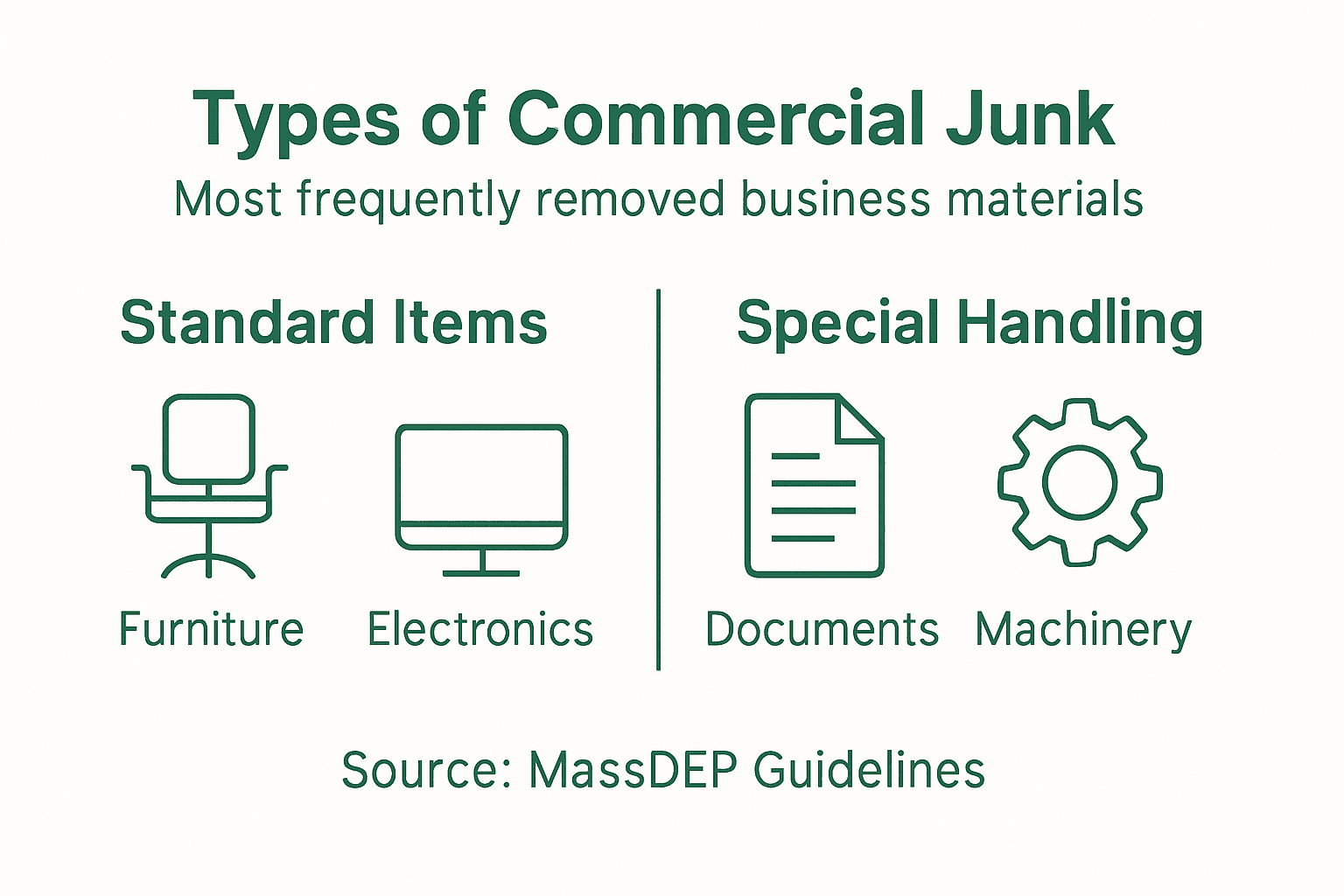
Beyond these standard categories, commercial removal teams handle confidential documents and storage, machinery and industrial equipment, retail fixtures and displays, and yard waste from commercial properties. The critical factor is proper classification of commercial waste, which determines whether materials get recycled, donated, or disposed of through regulated channels. A professional removal service knows which items contain valuable recyclable content, which can be donated to reduce your waste footprint, and which require hazardous waste protocols. This expertise matters because mishandling even one category can create compliance issues for your business.
Pro tip: Create an inventory list of what you need removed before scheduling service, organizing items by category (furniture, electronics, construction debris), so your removal team can arrive prepared with proper equipment and disposal plans for each waste type.
How the Commercial Removal Process Works
The commercial junk removal process might seem straightforward from the outside, but professionals handle multiple steps behind the scenes to ensure efficiency, compliance, and environmental responsibility. When you contact a removal company, you’re not just getting a truck and crew. You’re accessing a coordinated system designed to assess your specific situation, plan the approach, execute the removal, and ensure proper material handling from start to finish.
It all begins with an initial assessment and quote. The removal team evaluates what needs to be cleared, considers accessibility challenges at your location, and identifies any items requiring special handling. This is when they determine whether materials can be recycled or donated versus disposed of. Next comes scheduling and preparation, where the company obtains necessary permits if required for large projects, coordinates with your team about timing, and ensures crews arrive with appropriate equipment. The actual removal phase involves collection and transportation of junk to permitted facilities, with trained staff sorting materials efficiently to maximize recycling opportunities. For larger projects like renovation cleanouts, the process may include careful removal of construction materials and coordination with other contractors.
Once materials leave your property, the final critical step is proper disposal and recycling. Professional removal companies transport materials to permitted treatment or disposal facilities that meet environmental standards, ensuring compliance with air, water, and soil quality regulations. Items get sorted for recycling, donation, or appropriate disposal based on material type and condition. Your removal company maintains documentation throughout this process to satisfy regulatory requirements and provide you with proof of proper handling. This matters especially for confidential documents, electronics containing hazardous components, or construction debris with asbestos concerns. The entire workflow protects your business from liability while ensuring materials get handled responsibly.
Pro tip: Schedule your removal during your least busy business hours or outside peak operational times so crews can work efficiently without disrupting your team’s workflow.
Legal and Environmental Responsibilities in Massachusetts
Massachusetts takes waste management seriously. The state doesn’t treat commercial junk removal as a casual business activity. Your company faces specific legal obligations when clearing office spaces, warehouses, or retail locations, and ignoring these requirements can result in significant fines, liability issues, and operational disruptions. Understanding what the law requires helps you choose a removal partner who handles compliance so you don’t have to worry about it.
The foundation of Massachusetts law is compliance with the Massachusetts Department of Environmental Protection (MassDEP) regulations. Commercial junk removal businesses must follow MassDEP solid waste policies on proper handling, transportation, and disposal of waste, including adherence to waste bans, facility regulations, and reporting requirements under Massachusetts General Laws. This isn’t bureaucratic busy work. These regulations exist because improper disposal contaminates groundwater, soil, and air. When you hire a removal company, you’re essentially delegating responsibility for these legal requirements to them, which is why choosing an experienced, compliant provider matters enormously. They maintain documentation proving materials were handled legally, protecting your business from liability claims or environmental violations.
Massachusetts also enforces strict waste disposal bans that affect what goes where. The state prohibits landfill disposal of metals, food waste, textiles, mattresses, and construction debris, requiring these materials to be diverted to recycling or reuse facilities instead. If your office cleanout includes discarded furniture, old computers, or renovation materials, those items cannot simply be dumped. Professional removal services handle this complexity by routing banned materials to appropriate facilities. For instance, when clearing out an office with old mattresses or textile materials, the removal company must coordinate with facilities equipped to process these items rather than standard disposal sites. This responsibility falls on the removal provider, but you benefit from their expertise and connections.
Beyond these baseline requirements, specific materials require heightened attention. Electronics containing hazardous components, construction debris with potential asbestos, or confidential documents need specialized handling chains of custody. Your removal company should provide documentation confirming how these sensitive items were processed, which protects both your business and the environment. Working with a certified, insured removal service ensures you’re meeting Massachusetts’ environmental protection goals while protecting your company’s legal standing.
Pro tip: Request written confirmation from your removal provider stating which Massachusetts facilities their materials are transported to, and verify those facilities are MassDEP compliant before signing any removal agreement.
Key Costs, Risks, and Choosing a Provider
Cost is often the first question property managers ask when considering commercial junk removal. Understanding what you’ll pay and what factors influence pricing helps you budget accurately and avoid surprises. The reality is that commercial junk removal costs range from $100 to $800 per load depending on volume, waste type, and location. A single truckload of office furniture costs dramatically less than clearing an entire warehouse, and hazardous materials command premium pricing due to specialized handling requirements. Beyond the base removal fee, you’re also paying for disposal or recycling, labor, and transportation. Some companies charge by volume, others by weight, and transparent providers break down exactly where each dollar goes.
The real risk isn’t overpaying for removal. It’s choosing the wrong provider and facing legal consequences later. When a company cuts corners on waste handling, disposes of materials improperly, or lacks proper licensing, your business carries the liability. Massachusetts regulations hold property managers responsible for ensuring waste is handled lawfully, regardless of who you hired to do the work. This is why assessing a provider’s licensing status, environmental law compliance, insurance coverage, and disposal reputation matters more than saving $200 on removal costs. A business that operates without proper certifications or environmental compliance creates operational risks that far exceed any cost savings.
When evaluating providers, look for specific credentials and practices. Request proof of business licensing, environmental compliance certifications, and current insurance coverage. Ask directly how they handle different material types and request documentation showing disposal facility certifications. A reputable company provides written quotes, explains their pricing structure, and answers questions about their environmental practices without hesitation. Ask about recycling rates. What percentage of materials get diverted from landfills? How do they handle electronics, confidential documents, or construction debris specifically? Red flags include vague pricing, reluctance to provide references, or guarantees that seem unrealistically cheap. A quality removal service costs more upfront but protects your business from regulatory penalties, environmental liability, and reputational damage.
Massachusetts businesses increasingly prioritize not just cost but environmental responsibility. Does the provider partner with local donation centers? Do they separate recyclables from disposal waste? These practices reduce your company’s environmental footprint while supporting community organizations. The lowest price rarely reflects the best value when your legal compliance and environmental stewardship are on the line.
To help you choose the right commercial junk removal provider, here’s a comparison of key evaluation factors:
Assessment Area | What to Check | Why It Matters |
Licensing & Insurance | Valid permits, active insurance | Shields your business from liability |
Environmental Practices | Recycling rate, proper sorting | Reduces your company’s waste footprint |
Documentation Provided | Proof of disposal, compliance records | Ensures legal protection and peace of mind |
Facility Partnerships | Certified recycling & disposal sites | Confirms responsible material handling |
Pro tip: Request references from at least three Massachusetts businesses they’ve served, specifically asking those references about cost accuracy, material handling transparency, and whether they received proper disposal documentation.
Streamline Your Massachusetts Commercial Junk Removal with Junk Dispatch
Managing commercial junk removal in Massachusetts can be complex, especially with strict regulations and diverse waste types like electronics, construction debris, and confidential documents. The challenge lies in finding a reliable service that handles all these intricate details—from compliance documentation to eco-friendly disposal—so your business stays protected and clutter-free. Junk Dispatch understands these pain points and offers professional solutions tailored to commercial clients who need efficient, legal, and environmentally responsible junk removal.

Take control of your office, warehouse, or retail cleanouts today by choosing Junk Dispatch, where quick scheduling, transparent pricing, and insured crews meet Massachusetts’ regulatory demands. Explore our full range of services including demolition and same-day junk removal to keep your business running smoothly without the stress of disposal headaches. Visit our website now for a free estimate and experience commercial junk removal done right.
Frequently Asked Questions
What is commercial junk removal?
Commercial junk removal is a specialized service that collects, transports, and disposes of waste generated by businesses. This can include office furniture, construction debris, electronics, and other unwanted materials specific to commercial properties.
Why do businesses need commercial junk removal services?
Businesses require commercial junk removal services to efficiently clear unwanted materials while ensuring compliance with local and federal regulations. Professional removal companies manage the complexities of waste disposal, recycling, and documentation, allowing businesses to focus on their operations.
What types of waste are typically removed during commercial junk removal?
Common types of waste removed include office furniture, electronics, construction debris, confidential documents, and industrial equipment. Each type of waste requires specific handling and disposal methods to comply with environmental regulations.
How does the commercial junk removal process work?
The process typically begins with an initial assessment and quote, followed by scheduling and preparation. The removal team then collects and transports the junk to permitted facilities, ensuring proper sorting and recycling of materials to minimize landfill waste.
Recommended
Comments